






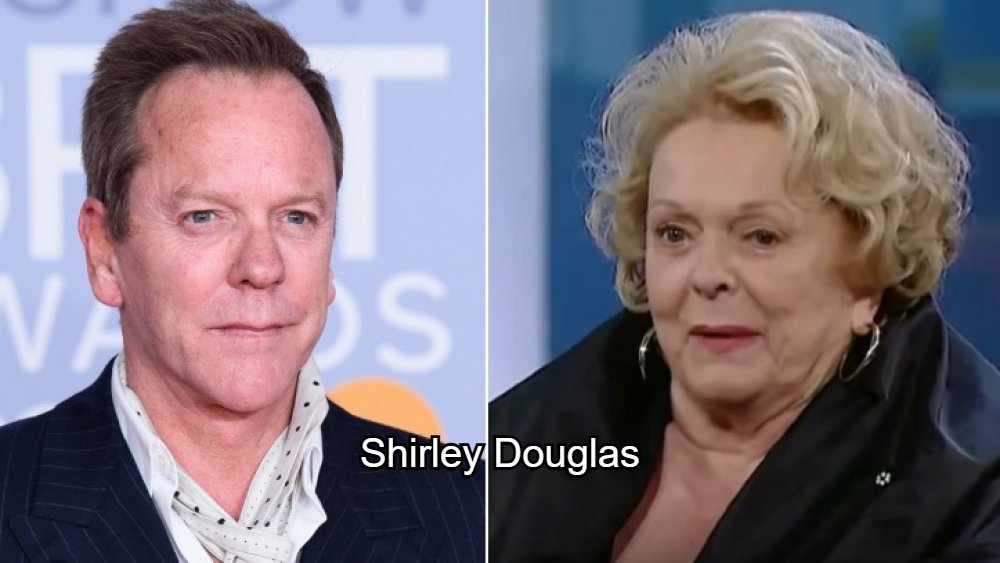
Who Was Shirley Douglas?
Shirley Douglas was a Canadian actress and activist whose life brought together two very different worlds: the creative world of film and television and the often difficult world of political and social activism. Born on April 2, 1934, in Weyburn, Saskatchewan, she became known not only for her acting but also for her outspoken commitment to causes she believed in. Over several decades, she built a career that crossed Canadian and American entertainment while remaining deeply connected to public issues.
Douglas came from a prominent Canadian family. Her father was Tommy Douglas, the Saskatchewan politician and social democratic leader who became one of the most influential figures in Canadian political history. Tommy Douglas is widely remembered for his role in the development of Canada’s universal health-care system. Growing up in that environment gave Shirley an early exposure to politics, public service, and social responsibility.
Her own career eventually took her far beyond Saskatchewan. She worked in theatre, film, and television and became a respected performer with an impressive range. At the same time, she remained politically active, particularly on issues involving civil rights, nuclear disarmament, and social justice. That combination of artistic achievement and activism is what makes Shirley Douglas’s life particularly memorable.
Shirley Douglas’s Early Life and Family Background
Shirley Douglas grew up during a period when Canadian politics was undergoing significant change. Her father, Tommy Douglas, was already involved in public life and would later become premier of Saskatchewan and leader of the federal New Democratic Party. His political philosophy emphasized social welfare, equality, and access to public services.
Growing up as the daughter of such a prominent politician inevitably influenced Shirley. However, she did not simply follow her father’s career path. Instead, she developed her own identity through the arts. Acting provided her with a way to express herself creatively while still allowing her to engage with social questions that mattered to her.
Her upbringing also exposed her to the idea that public figures could have responsibilities beyond their professions. This became a recurring theme throughout her life. Even after establishing herself as an actress, she continued to speak publicly about political and humanitarian issues, often accepting personal or professional consequences for taking controversial positions.
Shirley Douglas’s Acting Career
Shirley Douglas began her professional acting career in Canada, where she developed a strong foundation in theatre. Her stage experience was important because Canadian theatre provided many actors with rigorous training in voice, movement, character development, and live performance. Douglas eventually became a respected presence on both Canadian and international stages.
Her screen career expanded over time, and she appeared in numerous films and television productions. Among her notable film credits were Lolita, The Last of Sheila, and Shadow Dancing. She also worked extensively in television, appearing in series and made-for-TV productions throughout her career.
Douglas was never simply an actress who appeared in one recognizable role and then disappeared from the public eye. She maintained a career that stretched across decades and different forms of entertainment. Her ability to move between stage and screen reflected her versatility and helped establish her as one of Canada’s accomplished performers.
Shirley Douglas and Her International Career
Although Shirley Douglas was proudly Canadian, her acting career was not restricted to Canada. She spent significant periods working in the United States and became part of the broader North American entertainment industry. This gave her opportunities to work with major filmmakers and performers.
Her role in Stanley Kubrick’s Lolita was one of the early international highlights of her screen career. The 1962 film was controversial for its subject matter but became an important work in cinema history. Appearing in such a major production helped Douglas expand her professional profile beyond Canadian entertainment.
Her American work also demonstrated that Canadian performers could establish themselves internationally without abandoning their national identity. Douglas continued to maintain strong connections with Canada even while taking roles abroad. That balance between international professional success and Canadian identity remained an important feature of her career.
Shirley Douglas and Her Political Activism
Shirley Douglas’s activism was almost as important to her public identity as her acting. She became involved in political causes particularly associated with the left and with movements for civil rights and social equality. Her activism was not merely occasional charity work; she was willing to publicly associate herself with controversial political campaigns.
During the 1960s, Douglas supported the American civil rights movement. She was particularly connected to organizations working to advance racial equality and challenge segregation and discrimination. Her involvement reflected the influence of the broader social movements of the era, when artists, intellectuals, and activists were increasingly speaking out against racial injustice.
She also became involved in opposition to the Vietnam War and in campaigns concerning nuclear disarmament. These positions were politically sensitive at the time, particularly in the United States. Douglas’s willingness to associate herself with such causes demonstrated that she was prepared to accept criticism in exchange for standing behind her beliefs.
Shirley Douglas and the Black Panther Party Controversy
One of the most controversial chapters in Douglas’s life involved her support for the Black Panther Party and her subsequent legal troubles in the United States. During the late 1960s, she became involved in efforts connected to the organization’s community programs, including initiatives intended to provide assistance to children.
The Black Panther Party was a complex organization. It became internationally known for its armed self-defense stance and confrontational relationship with authorities, but it also operated community programs involving food, education, health care, and other forms of assistance. Douglas’s involvement was connected to support for such community initiatives.
In 1969, Douglas was arrested in California on charges related to possession of explosives. She was subsequently acquitted. The incident became an important part of her public history and contributed to the perception of Douglas as an actress who was willing to put her career and reputation at risk for political causes.
Her Political Views and Personal Convictions
Douglas’s political activism was deeply connected to her personal beliefs about equality and social responsibility. She did not seem particularly interested in keeping her political views separate from her public identity. For her, speaking out was part of being a responsible citizen.
That approach could be difficult in an entertainment industry where actors were often expected to avoid controversial political statements. Douglas nevertheless continued to express her opinions. She understood that activism could attract criticism, but she did not appear willing to abandon her principles simply to make her professional life easier.
Her political identity also connected her to the legacy of her father, although Shirley developed her own causes and methods of advocacy. Tommy Douglas’s influence could be seen in her concern for social justice, but Shirley’s activism was shaped by the international movements of her own generation.
Shirley Douglas’s Marriage to Donald Sutherland
Shirley Douglas was married to Canadian actor Donald Sutherland from 1966 to 1970. Their marriage connected two prominent Canadian actors who were both building careers in the international entertainment industry. During their relationship, they became one of Canada’s best-known acting couples.
The marriage produced two children, Kiefer Sutherland and his twin sister, Rachel Sutherland. Kiefer would later become a major actor in his own right, achieving international fame through film and television. His career would create another generation of the Sutherland family in entertainment.
Although Douglas and Sutherland eventually divorced, their professional and personal histories remained connected through their children. The family became an unusual example of Canadian talent achieving major success in Hollywood while maintaining strong ties to Canada.
Shirley Douglas as Kiefer Sutherland’s Mother
For many younger audiences, Shirley Douglas became especially recognizable as the mother of actor Kiefer Sutherland. Kiefer developed an extensive career in film before achieving enormous television success as Jack Bauer in 24. His career made the Douglas-Sutherland family name familiar to audiences around the world.
Shirley’s influence on Kiefer was not limited to the entertainment profession. He grew up surrounded by actors, political discussions, and the cultural life associated with both Canada and the United States. His parents’ careers gave him an unusual perspective on the demands and opportunities of public life.
Kiefer has spoken publicly about his mother with affection and respect. Her influence was part of the family environment that helped shape him as both an actor and a public figure. Their relationship remained important throughout Shirley’s later years.
Shirley Douglas’s Later Acting Work
Douglas continued acting well into the later stages of her life. While she was no longer necessarily appearing in the largest Hollywood productions, she remained active in Canadian film and television and took roles that demonstrated her continued professional ability.
Her later work included appearances in television series and Canadian productions. She was able to adapt to changing entertainment trends and remained respected by younger generations of Canadian performers. Her longevity was particularly notable in an industry where opportunities for older actresses have historically been limited.
Rather than treating retirement as the only possible path, Douglas continued to contribute when interesting opportunities appeared. Her later career reinforced the idea that acting was not simply a phase of her youth but a profession she remained connected to throughout her life.
Shirley Douglas and Canadian Identity
Although Douglas worked extensively outside Canada, she remained closely associated with Canadian culture. Her career was part of a broader generation of Canadian performers who helped establish a stronger Canadian presence in international entertainment.
Her connection to Canada was also political. The social values associated with her father’s career, including universal health care and social democracy, were part of the country’s political identity. Shirley carried some of those concerns into her own public life, although her activism extended into international issues as well.
For Canadian audiences, Douglas represented more than a successful actress. She was an example of someone who could participate in international entertainment while remaining outspoken about Canadian society and global political questions. That combination helped make her a distinctive figure in Canadian cultural history.
Shirley Douglas’s Relationship With Theatre
Theatre remained an important part of Douglas’s artistic identity. Before and alongside her screen career, she developed her skills through live performance. Theatre demands a different type of discipline from film and television because performers must sustain a character in real time without the ability to repeat a scene for editing.
Her stage work also connected her with the traditions of Canadian theatre, which played an important role in developing the country’s artistic institutions. Canadian actors of Douglas’s generation helped create a professional environment in which later performers could build careers without necessarily leaving the country permanently.
Her theatre background was visible in her screen performances. She brought a strong sense of character and presence to her roles, which allowed her to work effectively in both intimate television scenes and larger dramatic productions.
Shirley Douglas’s Final Years
In her later years, Shirley Douglas became less visible in mainstream entertainment but remained respected as an actress and activist. She continued to be remembered by Canadian audiences for both her professional accomplishments and her willingness to speak publicly about political issues.
Douglas died on April 5, 2020, in Toronto, just three days after her 86th birthday. Her death was reported by major Canadian and international media, and tributes emphasized both her acting career and her activism. Her son Kiefer Sutherland publicly announced her death and described her as a person of extraordinary qualities.
Her death also prompted renewed interest in her life story. Many people who knew her primarily as Kiefer Sutherland’s mother discovered the depth of her own career and political history. In that sense, her passing encouraged a broader reassessment of her place in Canadian culture.
Shirley Douglas’s Legacy
Shirley Douglas left behind a legacy that cannot be reduced to a single profession. She was an actress, activist, mother, and public figure who consistently combined creative work with personal convictions. Her career demonstrated that an artist could be successful while remaining deeply engaged with political and social issues.
Her activism is particularly significant because it involved causes that were often controversial. She supported civil rights, opposed the Vietnam War, and advocated for disarmament and social equality. These positions sometimes brought serious consequences, but she continued to participate in public life rather than retreating from difficult subjects.
Her influence also continues through her family. Kiefer Sutherland became a major international actor, while her daughter Rachel worked in the entertainment industry as well. Through her own career and her family, Shirley Douglas became part of a remarkable Canadian entertainment legacy spanning multiple generations.
Why Shirley Douglas Still Matters Today
Shirley Douglas remains relevant because many of the issues she cared about continue to shape public discussion. Questions about racial equality, social welfare, war, political responsibility, and access to basic services remain important decades after she first became involved in activism.
Her life also offers an interesting lesson about celebrity and responsibility. Douglas did not treat fame as a reason to remain silent. Instead, she used the visibility that came with her career to support causes she considered important. Whether people agreed with every position she took or not, her willingness to stand behind her beliefs was a defining feature of her character.
Her story is also valuable from an artistic perspective. She demonstrated that a Canadian performer could build a substantial international career without losing connection to home. Her work across theatre, film, and television helped establish a foundation for later Canadian actors who would find audiences around the world.
Frequently Asked Questions About Shirley Douglas
Who was Shirley Douglas?
Shirley Douglas was a Canadian actress and political activist. She worked extensively in theatre, film, and television and was also known for her involvement in civil rights, anti-war, and social justice causes. She was the daughter of Canadian politician Tommy Douglas and the mother of actor Kiefer Sutherland.
What was Shirley Douglas famous for?
Douglas was famous for both her acting career and activism. Her screen credits included Lolita, while her television and theatre career spanned several decades. She was also known for supporting civil rights and other progressive political causes.
Was Shirley Douglas married to Donald Sutherland?
Yes. Shirley Douglas and Donald Sutherland were married from 1966 until 1970. They had two children together, Kiefer Sutherland and Rachel Sutherland.
Was Shirley Douglas Kiefer Sutherland’s mother?
Yes. Shirley Douglas was the mother of actor Kiefer Sutherland. Her former husband, Donald Sutherland, was Kiefer’s father. Kiefer went on to become an internationally recognized actor, particularly known for the television series 24.
When did Shirley Douglas die?
Shirley Douglas died on April 5, 2020, in Toronto, Ontario. She was 86 years old and had celebrated her birthday only a few days earlier.
What political causes did Shirley Douglas support?
Douglas was associated with several progressive causes, including civil rights, opposition to the Vietnam War, nuclear disarmament, and social justice. Her activism became an important part of her public identity.
Final Thoughts on Shirley Douglas
Shirley Douglas lived a remarkably full life. Her career in acting alone would have been enough to establish her as an important Canadian cultural figure, but her story became much larger because of her political activism, family history, and willingness to speak openly about the issues she cared about.
She worked across theatre, film, and television, including internationally recognized productions, while maintaining a strong connection to Canada. Her marriage to Donald Sutherland and her role as Kiefer Sutherland’s mother added another dimension to her public profile, but neither should overshadow her own accomplishments.
Also Read: Camelia Kath