






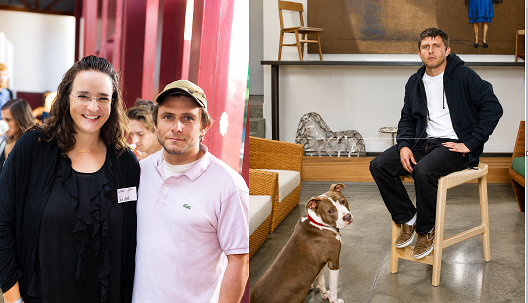
Willard Ford may belong to one of Hollywood’s most recognizable families, but his professional journey has unfolded largely outside the entertainment industry. As the son of legendary actor Harrison Ford, Willard grew up close to fame, filmmaking, and public attention. Instead of becoming an actor, however, he developed a career centered on entrepreneurship, fitness, fashion, design, and property development.
His decision to follow an independent path is one of the most interesting aspects of his story. While carrying a famous surname can create valuable opportunities, it can also bring expectations and constant comparisons. Willard appears to have handled that situation by concentrating on practical ventures that reflect his personal interests rather than attempting to reproduce his father’s success.
Over the years, he has been connected with several businesses, including Strong Sports Gym, the Ludwig clothing label, and the historic Kim Sing Theatre in Los Angeles. These projects reveal an entrepreneur with varied interests and a willingness to explore unconventional ideas. Although he maintains a relatively private life, Willard Ford has quietly developed an identity that goes far beyond simply being Harrison Ford’s son.
Who Is Willard Ford?
Willard Ford is an American entrepreneur best known publicly as the second son of Harrison Ford and the actor’s first wife, Mary Marquardt. He was born on May 14, 1969, several years before his father became an international superstar through movies such as Star Wars, Raiders of the Lost Ark, and Blade Runner. That timing means Willard experienced both an ordinary early family life and the dramatic changes that followed his father’s rise to fame.
Rather than entering Hollywood, Willard pursued business opportunities in several creative and lifestyle-related industries. He has been involved in fitness, clothing, real estate, event production, and the management of distinctive commercial spaces. His career does not fit neatly into one professional category, which is precisely what makes it interesting. He has shown a preference for developing concepts that combine functionality with visual identity and community appeal.
Willard also seems comfortable maintaining a lower public profile. He occasionally receives media attention because of his family, but he does not appear to seek celebrity status for its own sake. Most reliable information about him relates to his business activities rather than interviews about his private life. That separation has helped him establish a reputation as an entrepreneur instead of becoming a permanent supporting figure in his father’s celebrity story.
Early Life and the Influence of the Ford Family
Willard Ford was born to Harrison Ford and Mary Marquardt during their marriage, which lasted from 1964 until 1979. His older brother, Benjamin Ford, was born in 1966. Benjamin also chose a profession outside acting and became a respected chef and restaurateur. The different careers pursued by both brothers suggest that the Ford household encouraged independence rather than requiring the children to follow their father into the movie business.
Willard’s childhood changed significantly as Harrison Ford’s career accelerated. His father achieved worldwide recognition after playing Han Solo in the original Star Wars film, released in 1977. Willard was still young when that transformation occurred. Growing up with a famous parent likely exposed him to unusual opportunities, but it also meant living with media interest and the enormous public identity attached to the Ford surname.
His mother, Mary Marquardt, had studied alongside Harrison Ford at Ripon College and later worked as a cook. Although she remained far less visible than her former husband, her connection to food and practical creative work may have influenced the independent career choices of her sons. Benjamin entered the culinary world, while Willard Ford gravitated toward hands-on business ventures involving physical spaces, products, and customer experiences.
Education and the Decision to Avoid Acting
Willard Ford attended the University of California, Santa Cruz, where he earned a Bachelor of Arts degree in American studies. The subject is broad by nature, bringing together elements of history, culture, politics, society, and media. Although it is not a conventional business degree, it can provide a useful foundation for someone interested in consumer behavior, cultural trends, and creative entrepreneurship.
His education also helped distinguish his route from his father’s. Harrison Ford attended Ripon College but left before graduating and eventually built his acting career after working in various jobs, including professional carpentry. Willard completed his university education and applied his interests to commercial ventures rather than film roles. There is no substantial record of him seriously pursuing an acting career.
Choosing not to act was arguably a smart decision. Any performance by Harrison Ford’s son would inevitably have been compared with the work of Han Solo or Indiana Jones. By moving into entrepreneurship, Willard gained space to make mistakes, experiment, and succeed according to different standards. His career demonstrates that establishing an individual identity sometimes requires stepping away from the most obvious opportunity.
Willard Ford and Strong Sports Gym
One of Willard Ford’s best-known ventures is Strong Sports Gym, a fitness facility associated with Los Angeles. The gym was designed around serious training rather than the polished but impersonal atmosphere found in many large fitness chains. Its identity emphasized strength, physical discipline, coaching, and a strong sense of community among members.
Willard’s involvement in fitness reflects more than a temporary business interest. Strong Sports Gym has been presented as a place where strength training can support both physical and mental development. That approach fits the modern understanding of fitness as a long-term lifestyle rather than a quick cosmetic project. It also gives the business a clearer purpose than simply providing exercise equipment.
Like countless fitness businesses, the gym faced major difficulties during the COVID-19 pandemic. Public-health restrictions made it extremely challenging for independent facilities to continue operating normally, particularly in cities where indoor gyms remained closed or restricted for extended periods. The disruption placed significant financial pressure on the business and reportedly forced the closure of its physical location. Even so, Willard Ford work in this field remains an important part of his entrepreneurial identity and illustrates the uncertainty business owners sometimes face despite building a loyal community.
Fashion Entrepreneurship and the Ludwig Clothing Brand
Willard Ford also became involved in fashion through Ludwig, a streetwear label developed with designer Mike Dytri. The brand drew inspiration from the composer Ludwig van Beethoven, using the historical figure as the foundation for a modern and slightly rebellious visual identity. It was an unusual concept, especially in a market where streetwear labels often relied on sports, graffiti, or music-industry imagery.
Ludwig’s designs combined classical cultural references with contemporary clothing. The concept demonstrated Willard’s interest in ideas that bring together seemingly unrelated worlds. Beethoven and streetwear might not appear to be a natural pairing, but that contrast gave the label a recognizable personality. California Apparel News covered the company’s activities, including the opening of a store devoted to the fashion line.
The project also showed that Willard was not afraid to enter a competitive creative market. Fashion businesses must do more than produce attractive garments; they need a coherent identity, an understanding of their audience, reliable distribution, and consistent storytelling. Ludwig’s distinctive theme helped it stand apart, even if it never became a mass-market global label. For Willard Ford, it represented another opportunity to build a business around culture, design, and carefully considered branding.
The Transformation of the Kim Sing Theatre
Another major chapter in Willard Ford’s career involved the Kim Sing Theatre, a historic property in Los Angeles’ Chinatown. Originally connected with entertainment and community life, the building was transformed into a stylish multipurpose location. Willard used it as a residence, showroom, office, and venue for private functions and corporate events.
The renovation preserved parts of the building’s historical character while giving it a modern purpose. This type of adaptive reuse requires a careful balance. An owner must respect the identity of the original structure without allowing nostalgia to make the space impractical. Willard’s approach turned the property into something commercially useful while retaining the architectural features that made it memorable.
The theatre hosted events associated with major names and organizations. In a statement reported by The Hollywood Reporter, Willard Ford said the location had been used for launch and corporate events involving BMW, Nike, the Grammys, Pepsi, and Star Wars. He later placed the property on the market, and it was reportedly sold in 2016 for approximately $3.3 million. The project remains one of the clearest examples of his eye for design, property potential, and experience-based business.
Relationship With Harrison Ford and His Siblings
Willard is one of Harrison Ford’s five children. His older brother Benjamin is a chef, cookbook author, and restaurateur. Harrison later had two children, Malcolm and Georgia, with screenwriter Melissa Mathison. Malcolm pursued music, while Georgia became an actress. Harrison also became the father of Liam, whom his third wife, actress Calista Flockhart, had adopted before their marriage.
The Ford siblings have taken notably different professional paths. Their careers include food, business, music, and acting, making the family far more varied than the public image created by Harrison’s movie career might suggest. Willard’s place within this family is particularly interesting because he has consistently remained connected to creative work without becoming a performer.
Harrison Ford has also spoken honestly about fatherhood and the difficulty of balancing family responsibilities with an extremely demanding acting career. His work frequently required travel and extended periods away from home. Although the private details of his relationship with Willard should not be exaggerated, the family has appeared together at selected public events. Their story reflects the complicated reality of maintaining family connections across different marriages, careers, and generations.
Willard Ford’s Private Life and Children
Willard Ford is known for keeping his personal life away from constant media coverage. Unlike many celebrity relatives, he does not regularly share intimate details through interviews or public platforms. Reliable reports focus much more heavily on his education and companies than on his relationships, which suggests that privacy is a deliberate choice.
He is reported to have two children, Eliel and Guiliana Ford. Through Willard, Harrison Ford became a grandfather, adding another generation to the family. Very little verified information about Willard Ford children is publicly available, and respecting that boundary is important. Being related to a celebrity does not automatically make every part of a person’s family life a matter of public interest.
His approach offers a useful contrast to modern celebrity culture. Public attention can now be converted into followers, endorsements, and commercial influence, yet Willard has generally allowed his projects to attract more attention than his domestic life. That restraint has helped him preserve a degree of normality while still benefiting from the professional visibility associated with his family name.
Business Style, Challenges, and Achievements
Willard Ford career reveals a preference for businesses built around strong concepts. Strong Sports Gym was not simply a room filled with exercise equipment; it was developed as a training community. Ludwig was not just another clothing line; it used an unexpected historical theme. The Kim Sing Theatre was more than a property investment; it became an adaptable environment for living, working, exhibiting, and hosting events.
At the same time, his business history shows that entrepreneurship is rarely a straight line. Fashion labels compete for attention in an overcrowded market, specialized properties can take time to sell, and independent gyms are vulnerable to changes in rent, consumer behavior, and public-health regulations. Not every business remains open forever, but longevity is only one way to evaluate entrepreneurial achievement.
His most significant accomplishment may be the identity he created through repeated experimentation. He could easily have pursued visibility through the entertainment industry or relied entirely on his connection to Harrison Ford. Instead, he built and managed tangible ventures. His projects required operational decision-making, financial risk, branding, renovation, and customer engagement—the everyday realities that separate entrepreneurship from celebrity association.
Why People Remain Interested in Willard Ford
A large portion of the curiosity surrounding Willard Ford naturally begins with his father. Harrison Ford has played some of the most famous characters in cinema, so audiences remain interested in his family and the lives his children have built. Willard attracts particular attention because his quieter business career differs so sharply from the world of red carpets and blockbuster movies.
There is also a broader appeal in stories about children who choose not to enter a famous parent’s profession. Willard’s experience raises interesting questions about identity, inherited opportunity, and personal ambition. Having a recognizable name can open doors, but it cannot operate a gym, create a convincing fashion collection, or successfully transform a historic property. Those outcomes require genuine involvement and practical judgment.
Ultimately, Willard Ford’s story is compelling because it is not a standard Hollywood narrative. He did not chase movie stardom, release a tell-all memoir, or build his public identity around family revelations. He became an entrepreneur and explored several different industries. That path may be less glamorous than his father’s career, but it demonstrates independence, curiosity, and the courage to build something of his own.
Final Thoughts on Willard Ford
Willard Ford has created a professional life that stands apart from the fame surrounding his family. Born into a household that would eventually become closely linked with Hollywood history, he chose education and entrepreneurship over acting. His involvement in fitness, fashion, events, and real estate reflects a flexible and creative approach to business.
Projects such as Strong Sports Gym, Ludwig, and the Kim Sing Theatre show a consistent interest in distinctive concepts. Each venture combined commercial purpose with culture,Willard Ford design, or community. While some of these businesses encountered difficult market conditions, they still provide evidence of Willard’s willingness to take risks and work across industries.
Also Read: Adjua Ferguson