






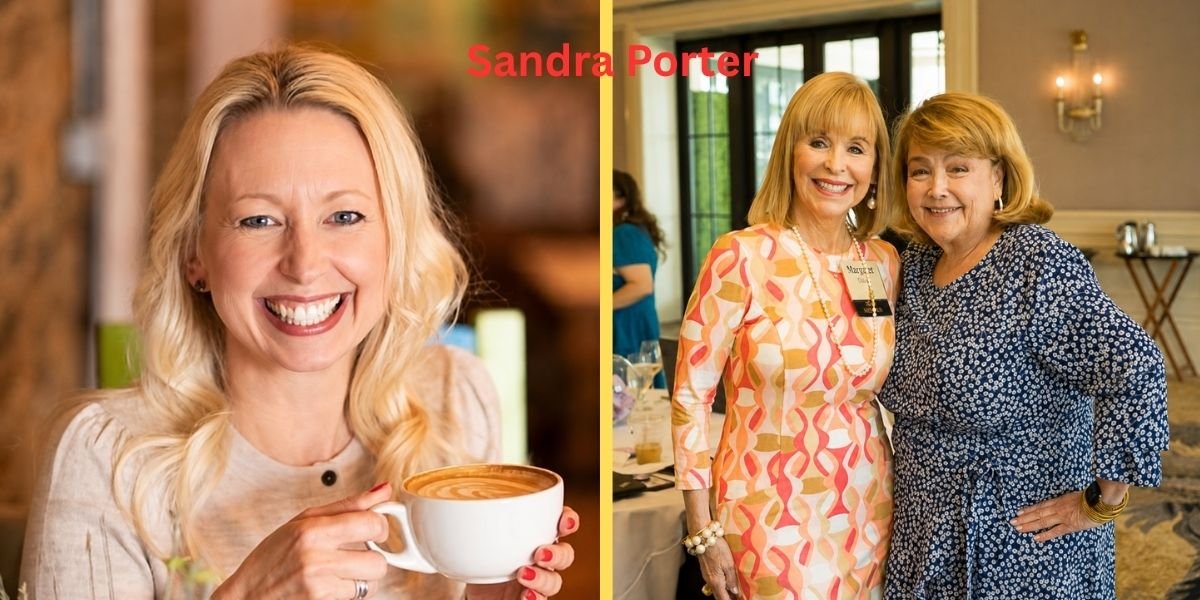
Sandra Porter is a British contemporary artist whose practice brings together painting, drawing, and printmaking. Based in Somerset, she is particularly known for abstract works built around grids, repeated lines, geometric structures, and carefully balanced areas of colour. Rather than treating these artistic disciplines as separate activities, Porter allows each one to influence the others, creating a body of work that feels connected even when the materials and techniques change.
Her artistic career has developed over several decades. Porter studied fine art before completing an MA in Fine Art Painting at Chelsea School of Art in 1981. She later expanded her technical knowledge by studying printmaking with Dorothea Wight at Morley College during the 1990s. Alongside her own practice, she spent many years teaching and lecturing in schools, colleges, and universities before eventually concentrating on her studio work full-time.
Today, Sandra Porter is recognized not only for the appearance of her finished works but also for the thought and process behind them. Architecture, repetition, balance, pattern, and the relationship between horizontal and vertical forms repeatedly appear in her art. Her work has been exhibited nationally and internationally and is held in several notable public and private collections.
Quick Bio
| Key Fact | Details |
|---|---|
| Name | Sandra Porter |
| Profession | Contemporary artist, painter, and printmaker |
| Location | Somerset, England |
| Education | Fine Art at Stourbridge College of Art |
| Higher Education | MA in Fine Art Painting, Chelsea School of Art, 1981 |
| Specialist Training | Printmaking with Dorothea Wight at Morley College |
| RWA Membership | Royal West of England Academician since 2017 |
| Bath Society of Artists | Member since 2016 |
| Major Award | First Prize, Bath Society Annual, 2019 |
| Main Interests | Grids, stripes, architecture, repetition, drawing, painting, and printmaking |
Porter has built her reputation gradually rather than around one particular exhibition or single recognizable image. Her professional story combines formal art education, a long teaching career, technical printmaking experience, and an ongoing interest in abstraction. That combination gives her work a strong sense of discipline without making it feel mechanical.
One of the most important facts about her career is the breadth of her practice. She is described by the Royal West of England Academy as a painter and printmaker, but drawing also plays a major part in the way she develops ideas. She often creates groups of related works in which individual pieces share certain structures while remaining different from one another.
Her work has also entered established collections. Porter’s own professional profile lists the UK Government Art Collection, RWA Bristol, the University of Bath, the University of Pelotas in Brazil, and the Tate and V&A Libraries among collections associated with her work.
Sandra Porter’s Art Education and Early Development
Sandra Porter’s formal art education began with an Art and Design Foundation Course before she studied Fine Art at Stourbridge College of Art in the West Midlands. She later moved to Chelsea School of Art, where she completed an MA in Fine Art Painting in 1981. This period established painting as an important foundation of her practice, although her interests would eventually extend far beyond a single medium.
Her relationship with printmaking developed more strongly during the 1990s when she studied at Morley College with the respected printmaker Dorothea Wight. Learning intaglio techniques gave Porter a slower and more methodical way of developing images. She has explained that printmaking encouraged greater reflection because the process itself requires planning, preparation, and technical decision-making.
That experience became important to her wider artistic thinking. Instead of deciding that she was either a painter or printmaker, Porter developed a practice in which drawing, painting, and printmaking continually inform one another. An idea explored as a drawing may influence a print, while the physical process of making a print can generate possibilities for later paintings.
From Teaching to a Full-Time Art Career
Teaching formed a major part of Sandra Porter’s professional life. Her career profile records work as a teacher and lecturer in schools, colleges, and universities from 1983 until 2012. The Royal West of England Academy similarly describes her as having spent around three decades in education before becoming a full-time artist.
A long teaching career can have an interesting effect on an artist’s practice. Teaching requires someone to explain processes, examine why techniques work, and respond to the different ways students approach creative problems. Porter also continued developing her own practice during these years, meaning education and studio work existed alongside each other rather than as completely separate careers.
In 2012, she left her long-term educational role to concentrate more fully on her own artwork. She continued sharing her printmaking knowledge through workshops from her Somerset studio. This transition gave her more time to pursue exhibitions, experiment with related bodies of work, and develop the abstract language of pattern and structure that now strongly defines her practice.
Sandra Porter’s Artistic Style and Creative Process
Sandra Porter’s artwork is strongly associated with grids, stripes, repeated forms, and geometric organization. At first glance, these elements can appear strict or mathematical, but her work is not simply about producing perfect geometry. Small differences between pieces, changes in colour, irregular marks, and variations within repeated structures give the work a more human and exploratory quality.
Porter is especially interested in creating works that are connected but not identical. The Royal West of England Academy describes her practice as involving series of images that reflect one another while still functioning independently. This idea allows repetition to become a creative tool rather than simple duplication. A similar structure can lead to completely different visual results depending on colour, spacing, material, or surface.
Process is central to this approach. Porter has explained that painting, drawing, and printmaking operate together in her studio and push one another forward. Printmaking can slow the process down and encourage reflection, while drawing may allow a more immediate response. Painting then introduces another relationship with surface and colour. The result is a practice built through movement between techniques rather than dependence on one fixed method.
How Architecture Influences Sandra Porter’s Work
Architecture is one of the strongest recurring influences in Sandra Porter’s art. She has drawn inspiration from dramatically different structures, including the cupolas of St Basil’s Cathedral in Moscow and the striped marble surfaces of Siena Cathedral. She has also found inspiration in much simpler buildings and materials, showing that architectural interest does not have to begin with famous monuments.
Porter pays attention to patterns that many people might walk past without noticing. Grilles, pavements, corrugated buildings, repeated windows, structural lines, and the relationship between horizontal and vertical forms can all provide visual starting points. Instead of producing straightforward architectural illustrations, she gradually transforms these observations into increasingly abstract images.
This is where her work becomes especially interesting. The finished piece may no longer resemble a particular building, yet the original architectural rhythm remains underneath it. Lines suggest structure, repeated areas create a sense of construction, and geometric relationships give the image an organized foundation. Her art therefore sits somewhere between observation and abstraction rather than belonging completely to either side.
Exhibitions, Awards, and Professional Recognition
Sandra Porter has exhibited her work extensively in Britain and internationally. Her exhibition history includes appearances connected with the Royal Academy Summer Exhibition, the Trinity Buoy Wharf Drawing Prize, the International Print Center New York, the Sunday Times Watercolour Competition, and other major open exhibitions. Her selection for the 2018 Trinity Buoy Wharf Drawing Prize is also documented by Bath Spa University.
Professional memberships have provided another important form of recognition. Porter became a member of the Bath Society of Artists in 2016 and was elected a Royal West of England Academician in 2017. Becoming an RWA Academician placed her within a long-established community of professional artists associated with one of Britain’s regional art academies.
Awards have accompanied that exhibition history. Porter received first prize at the Bath Society Annual in 2019 for her drawing Storyboard ii, while her career profile also records Arts Council support and an exhibition award from the Iona Stichting in Amsterdam. These achievements reflect recognition across drawing, printmaking, and broader contemporary art practice rather than success in only one medium.
Sandra Porter’s Recent Work and Continuing Practice
Sandra Porter remains active as a working artist. Her professional website records Paperworks at the Royal West of England Academy in Bristol from January to April 2025 among her recent exhibition activity. She also participated in Gentle Geometry at the RWA in 2024 alongside Tim Harrisson, Denny Long, and Carol Robertson.
These recent exhibitions fit naturally with the themes that have shaped her work for years. Geometry remains important, but Porter continues treating it as something flexible. Lines and repeated structures can create order, but variation prevents that order from becoming rigid. The tension between consistency and difference is one of the reasons her series-based approach continues to offer new possibilities.
Her continuing relationship with the RWA also demonstrates her involvement in the wider art community. Current RWA material continues to identify Sandra Porter RWA among participating artists, while the academy maintains a dedicated profile of her practice. Rather than stepping away after decades in art and education, she continues exhibiting and contributing to contemporary visual culture.
Why Sandra Porter’s Work Stands Out
One of the strengths of Sandra Porter’s work is that it can appear simple before revealing greater complexity. A viewer may initially notice stripes or a grid, but closer inspection shows changes in spacing, colour, surface, edges, and repeated marks. The work encourages people to consider how much visual difference can exist inside a seemingly restricted structure.
Her art also demonstrates how abstraction can grow out of real observation. Porter does not need to invent every form from nothing. Architecture, buildings, pavements, ironwork, and everyday patterns give her material that she can simplify, reorganize, and transform. The final result may be abstract, yet it still carries traces of the physical world.
That ability to connect structure with experimentation gives Porter a distinctive position as a contemporary artist. Her work respects technical processes while leaving room for discovery. After decades of painting, drawing, teaching, and printmaking, she continues to explore how familiar arrangements of lines and shapes can generate new visual experiences.
Conclusion
Sandra Porter’s career reflects patience, technical knowledge, and a long-term commitment to making art. From studying at Stourbridge College of Art and Chelsea School of Art to learning specialist printmaking techniques at Morley College, she gradually developed a practice that brings several creative disciplines together.
Her years in education added another dimension to that career, while her move into full-time studio practice allowed her to concentrate more deeply on abstraction, pattern, architecture, and repeated structures. Membership of the Bath Society of Artists and election to the Royal West of England Academy demonstrate the professional recognition her work has received.
Today, Sandra Porter is best understood as an artist who finds creative possibilities inside structure. Grids, stripes, buildings, lines, and recurring patterns may provide the framework, but variation and experimentation prevent the work from becoming predictable. That balance between control and change continues to define her paintings, prints, and drawings.
FAQs
Who is Sandra Porter?
Sandra Porter is a British contemporary abstract artist, painter, and printmaker based in Somerset. She is known for work exploring grids, stripes, pattern, architecture, and repetition.
What type of art does Sandra Porter create?
She works across painting, printmaking, and drawing, often developing abstract compositions inspired by geometric structures and architecture.
Where did Sandra Porter study art?
She studied Fine Art at Stourbridge College of Art and completed an MA in Fine Art Painting at Chelsea School of Art in 1981.
Is Sandra Porter a Royal West of England Academician?
Yes. Sandra Porter was elected a Royal West of England Academician in 2017.
Where can Sandra Porter’s work be found?
Her work is represented in public and private collections, including the UK Government Art Collection and the Tate and V&A Libraries.
Also Read: Jacey Carrick