






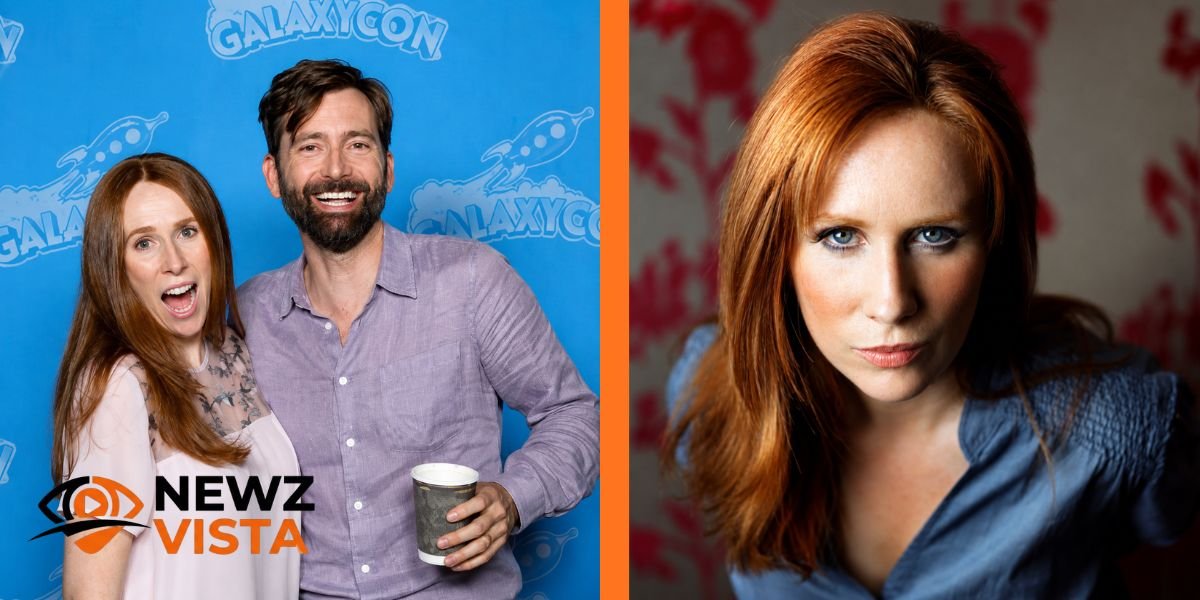
Catherine Tate is one of those performers who can walk into a scene, change her voice, alter her posture, and suddenly become an entirely different person. Best known for her sharp observational comedy, memorable television characters, and dramatic acting work, she has built a career that stretches far beyond the sketch shows that first made her widely famous.
For many viewers, Catherine Tate will always be associated with characters such as Lauren Cooper, Nan, and Donna Noble. However, limiting her career to those roles would overlook just how versatile she has been. Tate has worked across television, film, theatre, radio, and comedy, often moving comfortably between broad humour and emotionally demanding drama.
Her longevity is also important. British television changes quickly, and comedy trends can disappear almost overnight. Yet Catherine Tate has remained recognisable and relevant across different generations of viewers. Her ability to reinvent herself while keeping the distinctive comic instincts that made her famous has played a major role in that lasting appeal.
Who Is Catherine Tate?
Catherine Tate is a British actress, comedian, and writer who became a major television personality through her character-driven sketch comedy. Her performances often focus on everyday personalities pushed slightly beyond reality, allowing audiences to recognise familiar behaviours while still enjoying the exaggeration that makes the characters funny.
What separates Tate from many comedians is her acting foundation. She does not simply tell jokes while playing a character. Instead, she builds complete personalities through rhythm, movement, accent, facial expression, and emotional reactions. That acting-first approach gives many of her comic creations a surprisingly believable quality, even when the situations themselves become ridiculous.
Over the years, Tate has successfully avoided being trapped by one format. She has been a sketch performer, sitcom actress, dramatic television star, stage performer, film actor, and voice artist. This variety explains why audiences who discovered her through comedy may have later encountered her in completely different types of productions.
Catherine Tate’s Early Life and Interest in Performing
Catherine Tate was born Catherine Ford in London and developed an interest in performance before becoming a familiar face on British television. Like many successful actors, her rise was not immediate. She spent years developing her craft, studying acting and working through the kinds of smaller roles that help performers build experience before receiving wider recognition.
Her professional training played an important role in shaping her later career. Tate attended the Central School of Speech and Drama, where she developed skills that would eventually become essential to her comedy. The ability to manipulate voice, physicality, timing, and character psychology is especially noticeable in her sketch work, where she sometimes plays several dramatically different personalities within the same programme.
Before becoming a household name, Tate appeared in theatre and television productions while gradually establishing herself as a reliable character performer. Those early years gave her the technical discipline behind what later looked effortless on screen. Her success was therefore less of an overnight breakthrough and more the result of years spent developing a flexible performance style.
The Catherine Tate Show and Her Breakthrough in British Comedy
The major turning point in Tate’s public career came with The Catherine Tate Show. The programme gave her a platform to create and perform a wide collection of original characters, many of whom became instantly recognisable within British popular culture. Rather than depending on one recurring idea, the show moved between different personalities, social situations, and styles of humour.
One of Tate’s biggest strengths was her understanding of repeated phrases and behavioural patterns. Characters often had particular expressions, gestures, or reactions that audiences quickly learned to anticipate. Repetition can easily become predictable in comedy, but Tate frequently used anticipation itself as part of the joke. Viewers knew what a character might say, yet the circumstances surrounding the line kept changing.
The programme also demonstrated how closely Tate observed real people. Teachers, teenagers, pensioners, office workers, families, and socially awkward individuals all became material for comedy. Although her characters were exaggerated, they often felt familiar enough for viewers to say that they knew somebody who behaved in a similar way.
Lauren Cooper and the Cultural Impact of “Am I Bovvered?”
Lauren Cooper became arguably the most famous teenage character created by Catherine Tate. Written as a confrontational schoolgirl who responds defensively whenever she feels challenged, Lauren was instantly identifiable through her attitude, body language, speech patterns, and dismissive reactions.
The phrase associated with the character became widely repeated in Britain, particularly during the height of the show’s popularity. What made Lauren effective was not only the catchphrase itself but Tate’s understanding of teenage defensiveness. Lauren often insists that she does not care while clearly demonstrating, through increasingly emotional responses, that she cares a great deal.
From a comedy-writing perspective, the character is an example of contradiction being used effectively. Lauren’s words say one thing while her behaviour reveals another. Tate repeatedly builds scenes around that gap, turning a simple teenage attitude into a character that became one of the most memorable creations of British television comedy during the 2000s.
Nan: One of Catherine Tate’s Most Recognisable Characters
Another character closely associated with Catherine Tate is Joanie Taylor, better known simply as Nan. Unlike Lauren Cooper, whose comedy comes from teenage attitude, Nan is built around the contrast between traditional expectations of an elderly grandmother and her unexpectedly blunt personality.
Nan can appear sweet, polite, or harmless at first, but her conversations frequently reveal strong opinions and inappropriate remarks. Tate uses the contrast carefully, allowing the character’s appearance and social position to create one expectation before completely reversing it through dialogue and behaviour.
The popularity of Nan became significant enough for the character to continue beyond the original sketch series. This demonstrates Tate’s ability to create characters that feel larger than the programme in which they first appeared. Audiences were interested not only in individual jokes but also in the personalities themselves, giving certain characters a life beyond their original sketches.
Catherine Tate as Donna Noble in Doctor Who
Catherine Tate reached another enormous audience when she joined Doctor Who as Donna Noble. Initially appearing alongside the Doctor in a Christmas special, Donna eventually became a full-time companion. The role allowed Tate to show viewers who primarily knew her as a comedian that she was equally capable of delivering serious dramatic performances.
Donna was distinctive because she did not behave like a stereotypical science-fiction companion. She was outspoken, practical, funny, and willing to challenge the Doctor. Her relationship with him was built largely around friendship rather than romance, which gave their partnership a different emotional dynamic from several other companion relationships in the series.
As Donna’s story developed, Tate was given increasingly emotional material. She handled the transition from comedy to drama without making the character feel inconsistent. Donna could make viewers laugh in one scene and become deeply vulnerable in another. That balance is one of the main reasons the character remains so highly regarded among many Doctor Who fans.
Why Donna Noble Became Such a Popular Doctor Who Companion
Donna Noble’s appeal comes partly from her relatability. She is introduced as an ordinary person who does not initially see herself as particularly important. Through travelling with the Doctor, she gradually gains confidence and begins recognising the value of compassion, courage, and curiosity.
Tate also developed strong on-screen chemistry with David Tennant. Their rapid conversations, arguments, jokes, and moments of mutual understanding gave the relationship a believable rhythm. They often appeared more like close friends who constantly teased each other than a traditional heroic partnership, which helped make their scenes feel fresh.
Donna’s emotional development also gave Tate some of the strongest dramatic opportunities of her television career. The character became more than comic relief. She participated in morally complicated situations and experienced significant personal changes, demonstrating how effectively Tate could combine humour with serious emotional storytelling.
Catherine Tate’s Role in The Office
Tate later reached American television audiences through her role as Nellie Bertram in the US version of The Office. Joining an established comedy series is never easy, especially one with a large existing fanbase and carefully developed ensemble chemistry.
Nellie was deliberately unusual. She could be confident, unpredictable, ambitious, insecure, and socially awkward, sometimes within the same episode. Tate’s experience playing heightened personalities made her well suited to the character, although Nellie’s introduction intentionally made her disruptive within the workplace.
As the character developed, audiences were shown more vulnerable aspects of Nellie’s personality. That progression made her more complex than her early appearances suggested. Tate brought both theatrical exaggeration and emotional sensitivity to the role, which allowed Nellie to function as more than simply another eccentric employee at Dunder Mifflin.
Catherine Tate’s Theatre Career
Long before and alongside her television fame, Catherine Tate has maintained a strong connection with theatre. Stage acting demands a different type of performance from television because actors must communicate directly with a live audience without relying on editing, multiple takes, or close-up camera work.
Tate’s theatrical background helps explain the precision of her physical comedy. Many of her television characters use posture and movement as strongly as dialogue. That level of bodily control is closely connected to traditional stage performance, where an actor’s physical choices are essential for communicating personality.
Her theatre work also demonstrates that celebrity comedy was never the limit of her artistic ambitions. By continuing to participate in stage productions, Tate has remained connected to acting as a craft rather than simply functioning as a television personality. This has contributed to the versatility visible throughout her career.
Catherine Tate’s Approach to Character Comedy
One reason Catherine Tate’s comedy has remained memorable is that she focuses heavily on character rather than isolated jokes. A good Tate sketch often works because viewers understand how the character thinks, not simply because somebody delivers a funny line.
Her characters also tend to have strong internal logic. Lauren Cooper wants to appear emotionally unaffected. Nan believes she is entitled to express her opinions. Other characters may misunderstand social situations or become trapped by their own habits. These psychological patterns create the structure around which the jokes are built.
This approach gives Tate’s comedy replay value. A viewer may initially laugh at a catchphrase but later notice smaller performance details, including pauses, expressions, changes in tone, or reactions from other characters. The humour exists at several levels, which helps explain why many sketches remain recognisable years after their original broadcast.
How Catherine Tate Balances Comedy and Drama
Moving between comedy and drama is more difficult than it may appear. Comedy requires extremely precise timing, while drama often depends on emotional authenticity and restraint. Tate has demonstrated the ability to work successfully within both modes.
Her comic background can actually strengthen dramatic performances. Comedy teaches actors to understand rhythm, audience expectation, character contradiction, and emotional escalation. These same skills can be used differently in dramatic scenes, particularly when a character moves from humour into vulnerability.
Donna Noble is perhaps the clearest example of this combination. Tate never completely removes Donna’s comic personality when scenes become serious. Instead, she allows the humour and emotion to exist within the same character. As a result, dramatic moments feel like genuine developments rather than sudden changes created only for the storyline.
Writing and Creative Control in Catherine Tate’s Work
Catherine Tate is not simply a performer interpreting material written entirely by others. Her work as a writer has been central to her identity as a comedian, particularly through the creation of her own sketch characters.
Writing characters for yourself can provide unusual creative freedom. A performer understands their own strengths, vocal range, physical abilities, and comic instincts better than anyone else. Tate was therefore able to create personalities that specifically suited her ability to transform dramatically between roles.
Creative involvement also helped give The Catherine Tate Show a consistent comedic identity. Different characters could have completely different accents and backgrounds while still belonging to the same wider comic universe. Tate’s perspective connected them through recurring themes involving embarrassment, social behaviour, frustration, misunderstanding, and human contradiction.
Why Catherine Tate Has Remained Popular
Longevity in entertainment usually requires adaptability, and Tate has repeatedly demonstrated it. She did not spend her entire career recreating The Catherine Tate Show. Instead, she moved into science fiction, American television, theatre, films, voice work, and other creative projects.
Nostalgia has also helped maintain interest in her classic characters, but nostalgia alone cannot explain her continuing career. Younger viewers often discover older comedy through clips and streaming services, while established fans continue following her newer acting roles.
Perhaps most importantly, Tate has never depended entirely on one character. Lauren Cooper, Nan, Donna Noble, and Nellie Bertram are all completely different personalities. Being strongly associated with several unrelated characters is evidence of genuine range, something that has allowed her to avoid becoming permanently identified with just one performance.
Catherine Tate’s Influence on British Comedy
British comedy has a long tradition of performers creating exaggerated characters based on recognisable social behaviour. Catherine Tate became an important part of that tradition by introducing a collection of characters that reflected early 21st-century British life.
Her influence can be seen in the way character comedy continues to thrive across television, online video, and social media. Short-form platforms now reward highly recognisable personalities and repeated behavioural patterns, techniques that sketch comedians such as Tate used successfully long before modern social platforms became dominant.
At the same time, her work demonstrates why creating a memorable comedy character requires more than inventing a catchphrase. The phrase may attract attention, but performance, writing, consistency, and personality are what keep audiences interested. Tate’s strongest characters survived because they had all of those elements working together.
Catherine Tate’s Legacy in Television and Entertainment
Catherine Tate’s career represents an unusual combination of mainstream popularity and serious acting ability. She became famous through broad television comedy yet successfully expanded into dramatic and international roles without abandoning the style that made audiences notice her in the first place.
Her characters have also become part of British television history. Certain lines, gestures, and personalities remain recognisable even among people who may not have watched every episode of her original comedy series. Achieving that level of cultural familiarity is rare.
More importantly, Tate’s body of work demonstrates that performers do not have to choose permanently between comedy and drama. She has shown that the same skills used to create outrageous comic characters can also produce convincing emotional performances when applied with control and intelligence.
Conclusion
Catherine Tate has built a career that is far more varied than the catchphrases that initially made her famous. From the exaggerated personalities of The Catherine Tate Show to the emotional complexity of Donna Noble in Doctor Who and the eccentric workplace comedy of Nellie Bertram in The Office, she has repeatedly demonstrated impressive range.
Her greatest strength may be her ability to make characters feel specific. She understands how people speak, react, defend themselves, embarrass themselves, and reveal emotions they would rather hide. That observational instinct gives both her comedy and dramatic acting an unusual sense of authenticity.
Also Read: Rose Cornish