






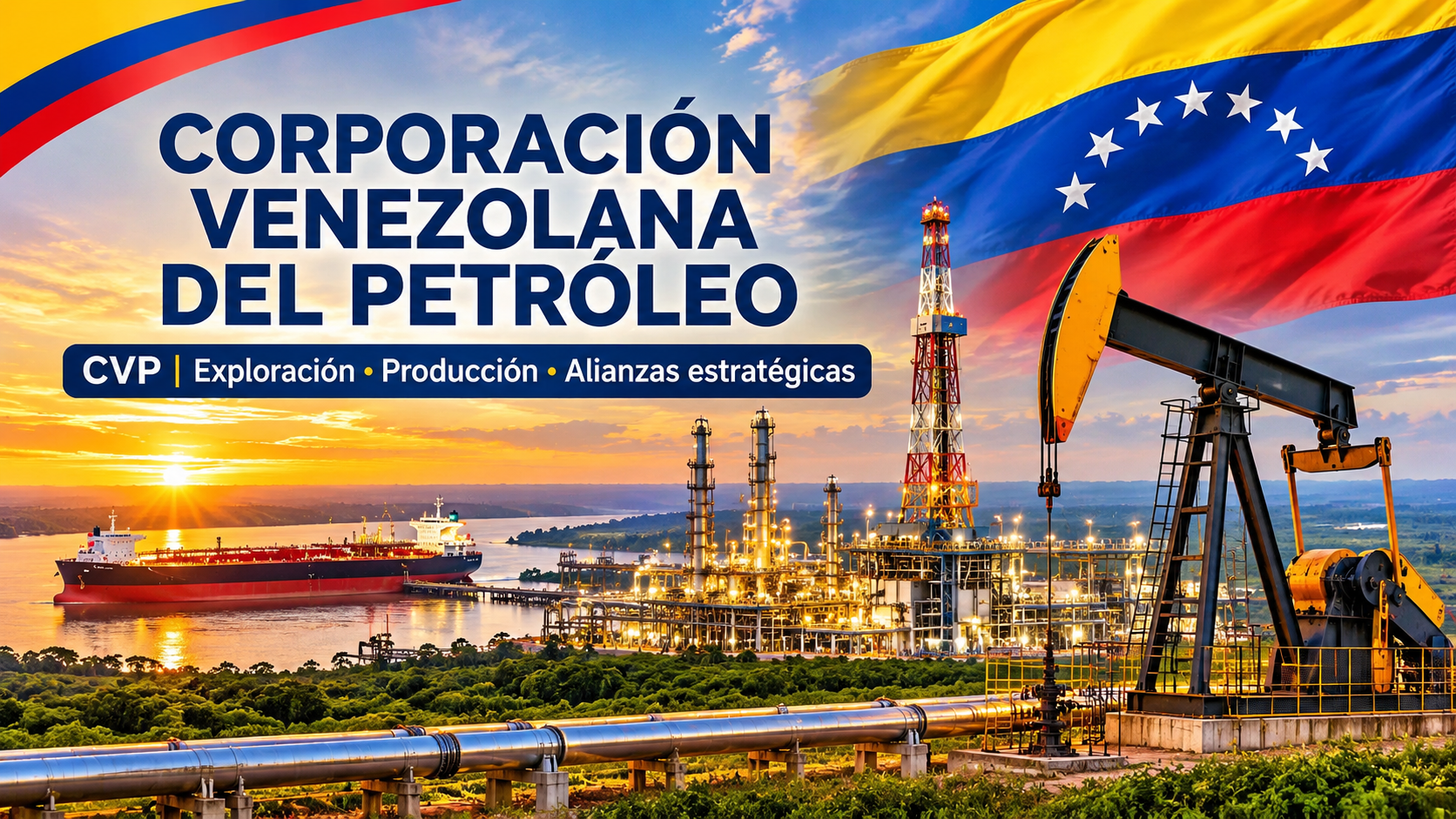
Corporacion Venezolana de Petroleo, commonly known as CVP, is an important name in Venezuela’s petroleum history. Established in 1960, the organization became the country’s first state-owned oil company and helped transform the way Venezuela managed its valuable energy resources. Its creation marked a significant shift toward greater government participation in an industry previously dominated by international petroleum corporations.
Venezuela has long been recognized as one of the world’s major oil-producing nations, with enormous petroleum reserves and an economy historically dependent on hydrocarbon exports. Within this environment, Corporacion Venezolana de Petroleo played an important role in developing national expertise, supporting petroleum exploration, and strengthening government involvement in energy production and distribution.
Over the decades, CVP has experienced several institutional changes, including its integration into Petróleos de Venezuela, S.A. (PDVSA) and its later involvement in international petroleum partnerships. Understanding the corporation’s history provides valuable insight into Venezuela’s nationalization policies, economic development, energy resources, and evolving relationships with international oil companies.
What Is Corporacion Venezolana de Petroleo?
Corporacion Venezolana de Petroleo is a Venezuelan state-owned petroleum organization historically associated with oil exploration, production, refining, transportation, and distribution. Often abbreviated as CVP, it was originally established to increase government participation in the country’s petroleum industry while developing domestic technical and managerial capabilities.
The corporation was created on April 19, 1960, through Presidential Decree No. 260. Its founding represented a major development in Venezuelan energy policy because it introduced a national enterprise capable of participating directly in petroleum operations. Before its establishment, much of the country’s commercial oil activity was controlled by foreign companies operating under government concessions.
Today, the CVP name is associated with the management of state participation in petroleum ventures involving PDVSA and other energy companies. Its historical activities and modern responsibilities are not identical, but both reflect Venezuela’s long-standing effort to retain control over its hydrocarbon resources.
History and Establishment of Corporacion Venezolana de Petroleo
The history of Corporacion Venezolana de Petroleo begins during a period of significant political and economic change in Venezuela. Throughout the early twentieth century, the country developed into a major petroleum exporter. However, international oil corporations controlled many of the facilities, technologies, and operations required to extract and market its resources.
By the late 1950s, Venezuelan policymakers were increasingly interested in strengthening national participation in the petroleum industry. The government wanted more than tax revenue from foreign companies. It sought an organization capable of gaining firsthand experience in exploration, production, refining, and petroleum commerce. This ambition contributed to the establishment of CVP in April 1960.
The corporation’s creation was associated with the petroleum policies of President Rómulo Betancourt’s administration and the influential energy policymaker Juan Pablo Pérez Alfonzo. During this period, Venezuela also helped establish the Organization of the Petroleum Exporting Countries (OPEC). Although CVP and OPEC performed different functions, both reflected the country’s growing determination to influence how its petroleum resources were managed.
Main Objectives and Responsibilities of CVP
One of the principal objectives of Corporacion Venezolana de Petroleo was to increase the state’s direct participation in petroleum operations. Instead of depending entirely on foreign concession holders, Venezuela wanted its own enterprise to acquire operational experience and eventually compete within the industry. This objective made CVP an important part of the country’s long-term energy strategy.
The corporation was authorized to participate in exploration, production, transportation, storage, refining, and distribution. Its responsibilities also included the possibility of forming partnerships with other companies and acquiring interests in petroleum businesses. Such flexibility allowed the organization to pursue projects while developing the institutional knowledge needed to operate in a technically demanding industry.
Another major responsibility involved supporting the domestic supply of petroleum products. CVP became particularly important in the distribution of gasoline, gas, and other refined products within Venezuela. This domestic focus helped establish a stronger government presence in energy services used by businesses, transportation systems, and households.
Early Oil Exploration and Production Activities
Corporacion Venezolana de Petroleo began developing its exploration and production capabilities during the 1960s. One significant milestone occurred in June 1961, when the corporation completed its first producing oil well. This achievement demonstrated that a Venezuelan state enterprise could directly participate in activities traditionally managed by international petroleum operators.
Throughout the following years, CVP received assignments in different parts of the country and explored opportunities in established and emerging petroleum regions. Its activities included work around Lake Maracaibo, exploration in western Venezuela, and investigations of potentially valuable hydrocarbon deposits. These projects helped develop technical expertise, even when exploration did not produce commercially significant discoveries.
Despite these efforts, CVP initially accounted for a relatively small proportion of Venezuela’s overall crude oil production. Historical World Bank records indicate that the corporation produced approximately 75,300 barrels per day in 1974, representing around 2.5% of the country’s production. Nevertheless, its importance extended beyond output figures because it helped prepare Venezuela for a larger role in managing the national petroleum industry.
The Role of CVP in Venezuela’s Oil Nationalization
Venezuela’s petroleum nationalization was one of the most important developments in the history of Corporacion Venezolana de Petroleo. During the early 1970s, the government moved toward a system in which the state would assume direct control over petroleum production and commercial activities. CVP’s earlier experience provided a foundation for this transition.
In August 1975, Venezuela enacted legislation reserving the petroleum industry and hydrocarbon commerce to the state. The nationalization process took effect on January 1, 1976, bringing previously concession-operated petroleum assets under government control. PDVSA was established as the parent organization responsible for coordinating and overseeing the country’s national petroleum operations.
CVP became part of the new corporate structure rather than independently assuming responsibility for the entire industry. Other operating companies, including Lagoven and Maraven, also played major roles. This arrangement allowed the government to manage a large and technically complex petroleum industry through specialized subsidiaries while retaining centralized strategic oversight.
Relationship Between Corporacion Venezolana de Petroleo and PDVSA
Petróleos de Venezuela, S.A., commonly known as PDVSA, is the national oil company of Venezuela. Established in 1975, PDVSA became responsible for planning, coordinating, and supervising the country’s state-owned petroleum operations. Corporacion Venezolana de Petroleo became part of this wider organizational framework.
The relationship between CVP and PDVSA evolved considerably after nationalization. During the late 1970s, the government consolidated various petroleum subsidiaries to improve coordination. CVP’s original operating structure was eventually absorbed into the reorganization that produced Corpoven, while the CVP name returned to importance in later petroleum development programs.
The corporation was reactivated in 1995 and subsequently participated in projects involving private investors and foreign petroleum companies. Its later role emphasized coordinating state participation in exploration agreements and joint ventures. These responsibilities helped connect PDVSA’s broader national objectives with specific commercial and technical petroleum projects.
Joint Ventures and International Petroleum Partnerships
International partnerships have been an important part of the later development of Corporacion Venezolana de Petroleo. Petroleum exploration requires substantial investment, specialized equipment, experienced personnel, and advanced technology. Working with international energy companies can provide access to resources that would otherwise be difficult or expensive to develop.
During the 1990s, CVP participated in exploration projects involving foreign investors through agreements that shared risks and potential profits. A 2002 PDVSA filing with the U.S. Securities and Exchange Commission described CVP as the subsidiary responsible for coordinating and supervising exploration and production in newly assigned areas. Under the arrangements discussed in that filing, CVP held equity interests in several joint ventures.
The corporation’s role developed again during the 2000s as Venezuela expanded its mixed-company framework. In 2003, CVP was reactivated for participation in such companies as a PDVSA affiliate. These arrangements became an important mechanism for involving external investors while maintaining Venezuelan state participation in petroleum development.
Importance of CVP to Venezuela’s Economy
Corporacion Venezolana de Petroleo has contributed to Venezuela’s economic history by helping establish the institutional foundations of a state-managed petroleum industry. Oil has traditionally been one of the country’s principal sources of export earnings and public revenue. Consequently, organizations involved in managing petroleum resources have played an influential role in national economic planning.
CVP’s contribution should not be measured exclusively by the amount of oil it produced. Its early operations helped Venezuelan professionals gain experience in petroleum management, engineering, commercial planning, and distribution. This experience supported the country’s ability to administer more complex energy operations during and after nationalization.
The corporation’s later participation in joint ventures also illustrates the relationship between petroleum development and investment. Exploration projects can create demand for technical services, infrastructure, transportation, and specialized labor. However, the economic benefits depend on operational efficiency, production levels, market conditions, and the effective management of public revenues.
Major Challenges Facing Corporacion Venezolana de Petroleo
Like other organizations within Venezuela’s petroleum industry, Corporacion Venezolana de Petroleo operates within a challenging economic and political environment. Oil production depends on infrastructure maintenance, reliable electricity, investment capital, specialized workers, and access to modern technology. Difficulties in any of these areas can affect productivity and the financial performance of petroleum projects.
International sanctions and changing commercial regulations have also complicated the environment for Venezuelan oil businesses. Restrictions affecting PDVSA have influenced financing, international transactions, equipment procurement, and partnerships. These rules have changed over time, and various authorizations have permitted certain petroleum-related activities under specified conditions.
As of November 2026, the U.S. Treasury’s Office of Foreign Assets Control maintains a Venezuela sanctions program that includes general licenses covering selected oil and gas activities. Consequently, the legal position of any particular CVP-related partnership requires reviewing the applicable rules rather than assuming that all international petroleum transactions are either permitted or prohibited.
The Strategic Importance of Venezuela’s Petroleum Reserves
Corporacion Venezolana de Petroleo enormous petroleum reserves make organizations associated with hydrocarbon development strategically important. The country possesses substantial deposits of conventional crude oil as well as extra-heavy crude, particularly in the Orinoco Oil Belt. Developing these resources requires significant technical knowledge and sustained investment.
The Orinoco Oil Belt presents both opportunities and operational difficulties. Extra-heavy crude frequently requires specialized production techniques, diluents for transportation, and upgrading or refining facilities capable of processing heavier petroleum. These requirements make technological expertise and well-structured partnerships particularly important.
For CVP and other PDVSA-related entities, participation in petroleum ventures creates opportunities to contribute to the development of these resources. However, reserves alone do not guarantee commercial success. The ability to convert underground resources into reliable production depends on financing, infrastructure, operational management, market access, and long-term planning.
How CVP Has Influenced Venezuela’s Energy Policy
Corporacion Venezolana de Petroleo holds a distinctive place in Venezuelan energy policy because it represented an early attempt to combine public ownership with direct petroleum operations. Before its establishment, the government primarily influenced the industry through concessions, taxes, and regulatory measures. CVP introduced another approach by allowing the state to participate as an operator.
This change helped shape the country’s broader petroleum strategy. The creation of a national petroleum company was one element of a policy framework that also included stronger oversight of concessions, conservation measures, and cooperation with other producing countries. Together, these initiatives expanded the government’s role in decisions concerning petroleum extraction and commercialization.
The corporation’s later involvement in exploration partnerships demonstrated how energy policy continued to evolve. Different administrations adopted different approaches to foreign investment and state participation, but the central question remained similar: how could Venezuela develop its petroleum resources while protecting national economic interests? CVP’s history provides an example of the different institutional solutions adopted over time.
Future Prospects of Corporacion Venezolana de Petroleo
The future importance of Corporacion Venezolana de Petroleo will depend heavily on developments within Venezuela’s broader petroleum industry. The country possesses substantial hydrocarbon resources, but increasing production requires investment, reliable infrastructure, skilled personnel, and access to international markets. These factors will influence the opportunities available to organizations involved in state petroleum ventures.
International cooperation could remain particularly relevant. Partnerships with experienced petroleum companies may help provide financing, equipment, and technical capabilities for maintaining existing fields or developing new projects. However, such arrangements must also address commercial risks, legal obligations, environmental responsibilities, and the expectations of participating companies.
Another important consideration is the global energy transition. Although oil continues to play a significant role in transportation, manufacturing, and industrial activity, changing energy policies and technological developments are influencing long-term demand. For CVP-associated projects, adaptability, operational efficiency, and responsible resource management will be important considerations in a changing global energy market.
Why Corporacion Venezolana de Petroleo Remains Historically Significant
Corporacion Venezolana de Petroleo remains historically significant because its establishment represented a turning point in the relationship between Venezuela and its petroleum resources. The company demonstrated the country’s ambition to move beyond receiving revenue from foreign operators and toward developing its own technical and commercial capabilities.
Its operations during the 1960s and 1970s helped introduce practical experience in petroleum production, refining, transportation, and domestic distribution. Although the corporation never became the dominant crude producer before nationalization, its activities contributed to the institutional development that made greater state involvement possible.
The CVP name also illustrates how Venezuela’s petroleum institutions have changed in response to political decisions and economic priorities. From its original creation in 1960 to its later involvement in joint ventures, the corporation has reflected different approaches to public ownership, international cooperation, and energy development. Understanding this history offers a clearer perspective on the complexities of Venezuela’s oil industry.
Conclusion
Corporacion Venezolana de Petroleo is an important institution in the history of Venezuela’s petroleum sector. Established in 1960, CVP became the country’s first state-owned petroleum company and helped expand government participation in oil exploration, production, refining, and distribution. Its creation represented an important stage in Venezuela’s efforts to exercise greater control over its energy resources.
The corporation’s development was closely connected with major changes in national petroleum policy, particularly the nationalization of the oil industry in 1975 and 1976. Following its integration into PDVSA’s organizational structure, the CVP name continued to evolve, eventually becoming associated with the management of petroleum partnerships and joint ventures involving international investors.
Although Venezuela’s petroleum industry has faced economic, technical, and regulatory challenges, CVP’s historical contribution remains significant. Its development provides valuable insight into how national oil companies emerge, how government energy policies evolve, and why petroleum resources continue to influence Venezuela’s economy and international relationships.
(FAQs)
What is Corporacion Venezolana de Petroleo?
Corporacion Venezolana de Petroleo (CVP) is a Venezuelan state-owned petroleum organization established in 1960. It has played an important role in oil exploration, production, distribution, and petroleum partnerships.
When was Corporacion Venezolana de Petroleo founded?
Corporacion Venezolana de Petroleo was founded on April 19, 1960, during the presidency of Rómulo Betancourt. It became Venezuela’s first state-owned petroleum company.
Is Corporacion Venezolana de Petroleo part of PDVSA?
Yes, Corporacion Venezolana de Petroleo is associated with Petróleos de Venezuela, S.A. (PDVSA), Venezuela’s national oil company. CVP has been involved in managing state participation in petroleum joint ventures.
What is the main purpose of Corporacion Venezolana de Petroleo?
The corporation was established to strengthen government participation in Venezuela’s petroleum industry. Its responsibilities have included supporting petroleum operations, developing national expertise, and coordinating oil-related partnerships.
Why is Corporacion Venezolana de Petroleo important to Venezuela?
Corporacion Venezolana de Petroleo helped establish state participation in Venezuela’s oil industry before nationalization in 1976. Its historical contributions supported the development of national petroleum management and the country’s energy sector.