





Mobile Interactive Group phones have completely changed how businesses communicate with customers. Today, people use their smartphones for shopping, entertainment, payments, banking and staying connected with their favourite brands. However, the foundations of many modern mobile services were established long before smartphones became an essential part of everyday life.
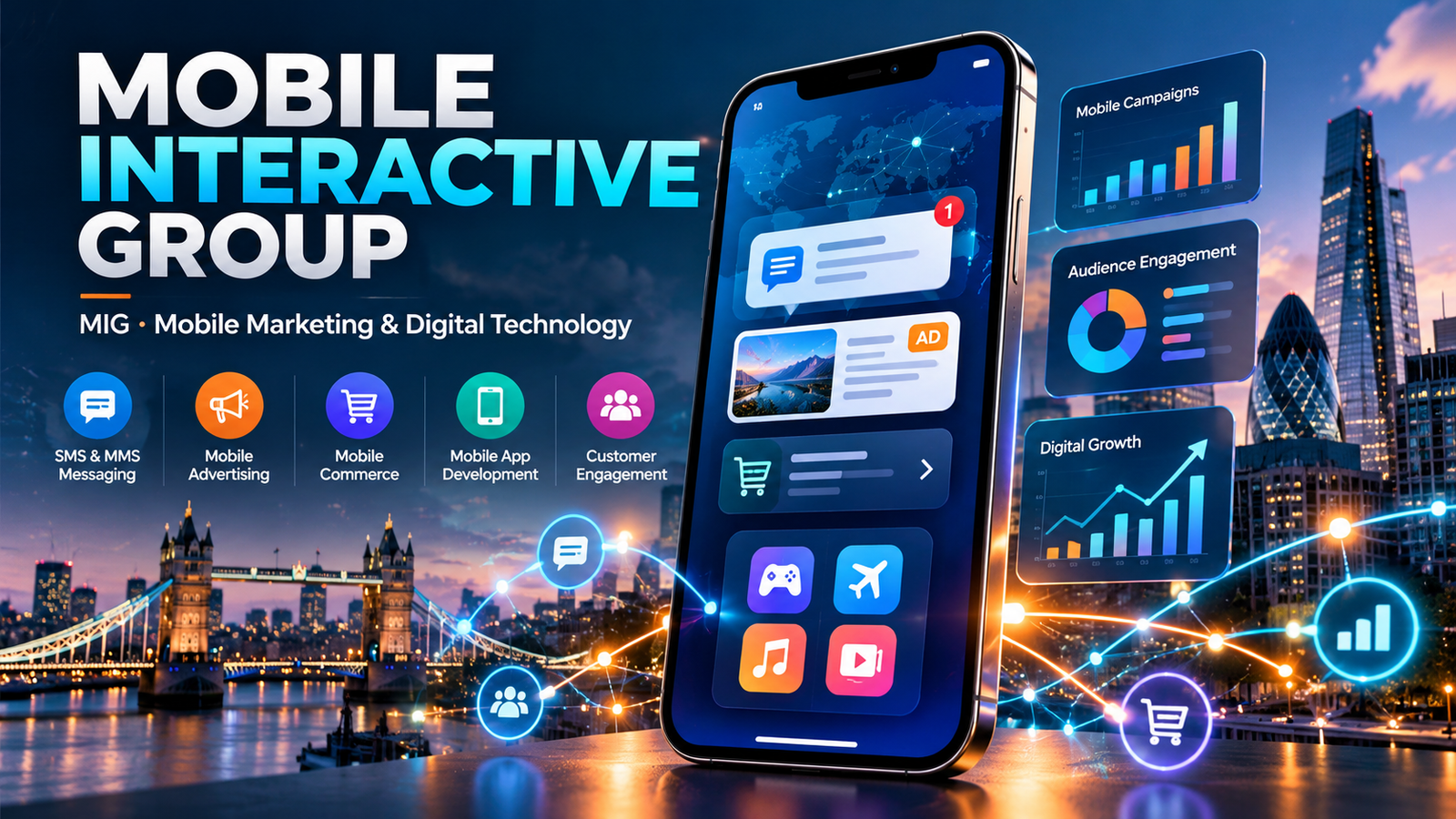
One company that played a notable role in this transformation was Mobile Interactive Group (MIG). The UK-based technology business helped companies explore the opportunities offered by mobile marketing, messaging, digital advertising, mobile commerce and interactive customer engagement.
During a period when the mobile industry was evolving rapidly, Mobile Interactive Group developed technology that connected businesses with consumers through their mobile devices. Its services supported a wide range of organisations, from telecommunications providers and retailers to broadcasters and international brands.
The company’s growth eventually attracted the attention of Velti, a global mobile marketing technology provider that acquired MIG in 2011. Although Mobile Interactive Group is primarily remembered as a historical business, its development offers valuable insight into the early growth of mobile marketing and digital customer interaction.
In this article, we’ll explore Mobile Interactive Group’s history, services, technology, business expansion, major acquisitions and lasting significance in the digital marketing industry.
What Is Mobile Interactive Group?
Mobile Interactive Group, commonly known as MIG, was a British technology company specialising in mobile marketing, advertising, messaging, commerce and payment solutions. The business helped organisations use mobile devices to communicate with consumers, deliver interactive experiences and support digital transactions.
Unlike traditional marketing agencies that mainly focused on advertising campaigns, MIG combined marketing services with technology infrastructure. Its platforms enabled businesses to develop mobile experiences while managing communication, customer engagement and commercial activities across different channels.
The company became particularly important during the transition from basic mobile phones to smartphones. At that time, businesses were beginning to recognise that mobile devices offered opportunities beyond calling and texting. MIG helped organisations explore those opportunities through practical technology and marketing solutions.
Quick Facts About Mobile Interactive Group
| Company Information | Details |
|---|---|
| Full company name | Mobile Interactive Group Limited |
| Common abbreviation | MIG |
| Country of origin | United Kingdom |
| Reported founding year | 2004 |
| Founder and CEO | Barry Houlihan |
| Industry | Mobile marketing and digital technology |
| Main services | Mobile advertising, messaging, commerce and billing |
| Major acquisitions | Piri Limited and Zaypay |
| Enterprise customers in 2011 | More than 300 |
| Employees in 2011 | More than 160 |
| International service reach | 44 countries |
| Acquired by | Velti plc |
| Acquisition announcement | 15 November 2011 |
| Initial acquisition consideration | At least $25 million |
These figures reflect historical company disclosures from 2011, not current operating statistics.
The Early History of Mobile Interactive Group
The story of Mobile Interactive Group began in the early 2000s, when the mobile communications industry was developing rapidly. Velti’s historical acquisition announcement described MIG as a business founded in 2004. At that point, many people still relied on basic mobile handsets, and mobile internet services were far less advanced than the technology available today.
Despite those limitations, businesses were already exploring ways to reach customers through their phones. Text messaging had become extremely popular, and companies were experimenting with promotional messages, mobile subscriptions and interactive campaigns. MIG recognised the commercial potential of these services and began building its business around mobile communication technology.
Under founder and CEO Barry Houlihan, Mobile Interactive Group expanded its capabilities and developed relationships with major companies. Its growth showed how demand for mobile marketing solutions was increasing as organisations looked for more direct ways to communicate with customers. What began as an opportunity within a relatively young industry eventually developed into a substantial international technology business.
How Mobile Interactive Group Became a Major Mobile Marketing Company
Mobile Interactive Group expanded during a period when companies were shifting more of their marketing investment towards digital channels. Businesses wanted to communicate with consumers wherever they were, rather than relying exclusively on television, print advertising or desktop websites. Mobile devices offered a direct connection that traditional advertising channels could not always provide.
MIG responded by developing a broader portfolio of services. Instead of concentrating only on text-message promotions, the company moved into mobile applications, advertising technology, customer relationship management and digital payments. This made its services relevant to businesses with different commercial requirements.
By 2010, MIG had reported more than $100 million in gross billings and over $20 million in net revenue. Around the time of its acquisition in 2011, the company had more than 160 employees and technology serving over 300 enterprise customers. These historical figures illustrate how significantly the business had grown within the competitive mobile marketing industry.
Mobile Marketing Services Offered by Mobile Interactive Group
Mobile marketing was one of MIG’s central business activities. The company helped brands communicate with their audiences through mobile technology, creating opportunities for promotions, customer engagement and direct interaction. Its solutions were designed for an environment where businesses increasingly needed to reach consumers across different devices and networks.
An important advantage of mobile marketing was its ability to create a more immediate connection between businesses and customers. Promotional messages, interactive campaigns and mobile-friendly experiences could encourage users to respond directly. However, effective campaigns still depended on relevant content, appropriate permissions and a clear understanding of customer needs.
MIG’s marketing technology was also part of a larger service offering. Businesses could connect mobile communication with advertising, commerce and customer management. This integrated approach helped establish the idea that mobile marketing should support the wider customer journey instead of functioning as an isolated promotional activity.
Mobile Advertising and Digital Campaign Technology
Advertising technology represented another important area of Mobile Interactive Group’s operations. As mobile internet usage increased, businesses needed ways to present advertisements on mobile websites and other digital platforms. MIG developed capabilities intended to support this growing demand.
Mobile advertising brought new technical challenges. Screen sizes varied widely, internet connections were inconsistent, and different devices supported different features. Advertising platforms therefore needed to account for how consumers actually used their phones. Companies such as MIG helped develop the infrastructure necessary to deliver mobile-oriented advertising experiences.
The broader value of mobile advertising extended beyond displaying promotional messages. Brands wanted to understand how audiences responded to campaigns and whether mobile interactions contributed to meaningful business outcomes. This emphasis on engagement and measurable performance remains an important principle of digital advertising today.
Mobile Messaging and Customer Communication Solutions
Messaging was one of the earliest and most accessible mobile communication channels. Before smartphone applications became widespread, SMS provided businesses with a practical method of contacting customers. Mobile Interactive Group operated in this market by offering messaging-related technology and services.
Text messaging could support promotional campaigns, customer notifications and interactive services. For businesses, the attraction was straightforward: consumers were already familiar with receiving and responding to messages. Organisations did not necessarily need customers to install applications or use advanced smartphones to participate.
As technology developed, messaging solutions became more closely connected with wider marketing systems. Companies began combining mobile communication with customer databases, digital campaigns and service management. MIG’s activities reflected this transition towards more coordinated customer communication, where messaging formed part of a wider business strategy.
Mobile Commerce and Digital Payment Services
Mobile Interactive Group also operated in mobile commerce, an area that became increasingly important as consumers gained access to better mobile internet connections. Mobile commerce allowed businesses to offer shopping and transaction experiences through mobile devices rather than relying entirely on desktop computers or physical stores.
For retailers, the challenge involved more than creating mobile-friendly product pages. Customers needed convenient navigation, accessible information and reliable payment options. Businesses also needed technology capable of supporting transactions across different devices and telecommunications environments.
MIG expanded its payment capabilities through the acquisition of Zaypay in 2011. The Amsterdam-based company specialised in international micropayments using methods such as SMS, telephone calls and other alternative payment systems. This acquisition strengthened MIG’s ability to combine mobile engagement with payment functionality.
How Mobile Interactive Group Supported Customer Relationship Management
Customer relationship management, commonly known as CRM, involves organising customer information and improving interactions between businesses and their audiences. As mobile technology became more common, organisations wanted CRM systems that could support communication through mobile channels.
Mobile Interactive Group strengthened its presence in this area by acquiring Piri Limited in 2010. Piri was a Manchester-based provider of mobile marketing and CRM software. Its technology included cross-platform customer relationship management capabilities and a self-service web interface for mobile marketing.
The acquisition helped MIG bring additional CRM functionality into its technology portfolio. By connecting customer management with mobile communication, businesses could develop more coordinated campaigns and customer interactions. This approach anticipated the growing importance of integrated digital marketing platforms.
Mobile Interactive Group’s Acquisition of Piri Limited
In June 2010, Mobile Interactive Group announced the acquisition of Piri Limited, a technology company specialising in mobile marketing and CRM software. The purchase was part of MIG’s efforts to strengthen its technical capabilities and expand the services available to enterprise customers.
Piri had developed technology that supported cross-platform CRM and self-service mobile marketing. These capabilities complemented MIG’s existing technology offering, which included messaging systems, mobile publishing tools and advertising infrastructure. Bringing the businesses together created opportunities to combine different marketing functions within a broader platform.
The transaction also demonstrated MIG’s approach to expansion. Rather than building every capability internally, the company used acquisitions to obtain established technology and specialist expertise. This strategy became particularly relevant as competition increased and businesses demanded more comprehensive mobile solutions.
The Acquisition of Zaypay and Expansion Into Mobile Payments
In September 2011, Mobile Interactive Group announced another significant acquisition, this time involving Zaypay, a mobile payments business based in Amsterdam. The deal represented a further expansion of MIG’s services into the growing market for digital transactions.
Zaypay provided technology that enabled businesses and developers to process relatively small payments through methods including SMS, telephone calls and in-application transactions. These alternative payment options were particularly relevant when conventional online payment processes were less convenient for mobile users.
At the time of the acquisition, Zaypay operated in 44 countries. MIG announced that the business would continue operating independently following the purchase. The acquisition demonstrated how mobile marketing companies were increasingly interested in connecting consumer engagement with the ability to complete transactions.
Major Brands and Business Clients of Mobile Interactive Group
One of the strongest indicators of Mobile Interactive Group’s historical commercial presence was its enterprise customer base. Around the time of the Velti acquisition, MIG reported that its technology platform was used by more than 300 enterprise customers across different industries.
The company’s reported clients included Skype, Vodafone, O2, PepsiCo, ITV, BBC, Sony, Barclaycard and Marks & Spencer. These organisations represented telecommunications, entertainment, retail, financial services and other sectors. Their different requirements highlight the wide range of business applications for mobile technology.
Working with large organisations also required technology capable of supporting significant communication and commercial activity. Although the precise services provided to every client differed, MIG’s reported customer relationships demonstrated its position within the mobile marketing market at that time. These should be understood as historical client relationships rather than evidence of present-day contracts.
Mobile Interactive Group’s Role in Television and Audience Engagement
Mobile Interactive Group also developed technology connected with television broadcasting and audience interaction. As broadcasters explored new methods of engaging viewers, mobile devices became useful tools for connecting television content with audience participation.
Interactive broadcasting could involve viewers responding to programmes, participating in activities or engaging with content through their phones. These experiences helped extend entertainment beyond the television screen and encouraged more active audience involvement.
MIG’s historical technology offering included mobile and broadcast interaction capabilities supporting real-time social media engagement. Its work in this area reflected an important industry shift: television, mobile communication and online social interaction were beginning to overlap. Today, the relationship between entertainment and connected devices is familiar, but these early systems helped demonstrate its commercial possibilities.
International Expansion of Mobile Interactive Group
Mobile Interactive Group’s business was not limited to the United Kingdom. As demand for mobile marketing and payment technology increased, the company expanded its international presence and developed services for customers operating in different markets.
By November 2011, MIG offered mobile marketing, commerce and billing services across 44 countries. It also reported operations in the United Kingdom, United States, Netherlands, Belgium and Australia. This international reach made the company attractive to businesses that needed technology supporting customers across geographical boundaries.
Operating internationally created both opportunities and challenges. Telecommunications infrastructure, consumer behaviour, payment systems and regulatory requirements could vary significantly between countries. Companies providing mobile technology had to account for those differences while maintaining services suitable for enterprise customers. MIG’s geographical expansion illustrated the increasingly international nature of the mobile marketing industry.
Why Velti Acquired Mobile Interactive Group in 2011
One of the most important events in Mobile Interactive Group’s history occurred in November 2011, when Velti announced that it had acquired the company. Velti was already a major provider of mobile marketing and advertising technology, and the acquisition was intended to strengthen its international position.
The transaction offered several potential advantages. MIG brought enterprise customers, mobile commerce capabilities, messaging technology and experience in interactive broadcasting. Velti, meanwhile, had its own advertising and marketing infrastructure. The combination was intended to broaden the services available to customers across different markets.
Under the announced agreement, Velti would pay a minimum consideration of $25 million, including $20 million in cash at closing. Additional performance-related payments could increase the total by as much as $34 million. The deal was presented as a strategic expansion intended to strengthen Velti’s position in the global mobile marketing industry.
What Happened to Mobile Interactive Group After the Acquisition?
Following the acquisition, Mobile Interactive Group became part of Velti’s wider business structure. Rather than continuing solely as an independent marketing technology company, MIG’s activities were incorporated into the operations of its new parent company.
The mobile marketing industry continued changing, and Velti later experienced significant financial and operational difficulties. In November 2013, the company announced an agreement to sell several mobile marketing businesses to affiliates of GSO Capital Partners, a credit investment business associated with Blackstone. Mobile Interactive Group Limited was among the UK businesses identified in the proposed transaction.
In December 2013, Velti announced that it had received court approval for the sale, which was expected to close shortly afterwards. These developments are important for understanding MIG’s corporate history. They also mean the original Mobile Interactive Group should not be presented as though it remains an independent business operating under its original structure today.
Why Mobile Interactive Group Was Important to Digital Marketing
Mobile Interactive Group operated during a particularly important period in the development of digital marketing. Businesses were moving away from treating mobile phones as simple communication devices and beginning to recognise them as platforms for advertising, entertainment, shopping and customer engagement.
MIG’s broad portfolio reflected this changing environment. Its activities brought together marketing technology, messaging, CRM, interactive broadcasting and payments. Although these services are commonplace within modern digital ecosystems, developing and integrating them presented significant technical and commercial challenges during the company’s growth years.
The company’s history also illustrates how quickly technology markets can evolve. A business can experience rapid expansion, establish major customer relationships and still undergo significant structural changes within a relatively short period. MIG’s experience offers lessons about innovation, competitive positioning and the importance of adapting to technological developments.
What Businesses Can Learn From Mobile Interactive Group
One lesson from Mobile Interactive Group’s history is the importance of recognising changes in consumer behaviour. MIG expanded at a time when mobile communication was becoming increasingly important to businesses. Its development showed the value of understanding how emerging technology might reshape customer relationships.
Another lesson concerns the benefits and challenges of building integrated services. Businesses often prefer technology that works across different parts of their operations. By combining marketing, messaging, commerce and customer management, MIG pursued a more comprehensive offering. However, maintaining such a wide range of capabilities also requires investment, coordination and technical expertise.
Finally, the company’s acquisitions highlight the role of strategic partnerships and expansion. Purchasing specialist technology businesses can help an organisation develop new capabilities more quickly. Nevertheless, successful integration is essential, and acquisitions alone cannot guarantee long-term commercial success. These are lessons that remain relevant to technology companies operating today.
Mobile Interactive Group’s Legacy in the Modern Mobile Industry
The mobile industry has changed dramatically since Mobile Interactive Group was established. Smartphones now support sophisticated applications, location-based services, digital wallets, personalised advertising and countless other features. Many activities that once required specialist mobile infrastructure are now part of everyday consumer technology.
Mobile Interactive Group’s historical importance lies in its participation in the earlier stages of this development. The company helped bring together several areas of mobile technology at a time when businesses were learning how to use phones as commercial platforms. Its work reflected the industry’s movement towards more connected digital services.
It would be an overstatement to attribute today’s mobile marketing ecosystem to any single company. Numerous technology providers, telecommunications operators and software developers contributed to its growth. MIG is best understood as one of the businesses that recognised and pursued the opportunities created by increasingly connected mobile consumers.
Conclusion
Mobile Interactive Group was an important participant in the development of mobile marketing technology during the 2000s and early 2010s. Founded in the United Kingdom, the company expanded from mobile communication services into advertising, commerce, customer relationship management, billing and interactive digital experiences.
Its growth was supported by enterprise customer relationships, international operations and acquisitions such as Piri Limited and Zaypay. By the time Velti acquired the business in November 2011, MIG had developed a substantial presence in the mobile marketing industry.
Although the original company later became involved in further corporate restructuring, its story remains relevant. Mobile Interactive Group demonstrates how early mobile technology businesses helped connect communication, marketing and commerce, anticipating many features of the modern digital economy.
FUQS
What was Mobile Interactive Group?
Mobile Interactive Group was a UK-based mobile marketing and technology company offering services including advertising, messaging, commerce, billing and customer engagement. It was commonly known by the abbreviation MIG.
Who founded Mobile Interactive Group?
Mobile Interactive Group was founded by Barry Houlihan, who also served as its CEO. The company was described in historical corporate announcements as having been founded in 2004.
When was Mobile Interactive Group acquired?
Velti completed its acquisition of Mobile Interactive Group in November 2011. The transaction was publicly announced on 15 November 2011.
How much did Velti pay for Mobile Interactive Group?
The announced agreement included minimum consideration of $25 million, with the possibility of additional performance-related payments of up to $34 million. The maximum potential consideration was therefore approximately $59 million.
What services did Mobile Interactive Group provide?
MIG offered mobile marketing, digital advertising, messaging, mobile commerce, customer relationship management and mobile billing solutions. It also developed technology supporting interactive broadcasting and audience engagement.
Which companies worked with Mobile Interactive Group?
Historical enterprise customers included Skype, Vodafone, O2, BBC, Sony, PepsiCo and Marks & Spencer. These were reported business relationships around 2011, not verified current clients.
Is Mobile Interactive Group still operating independently?
Mobile Interactive Group was acquired by Velti in 2011 and was subsequently included in further corporate sale arrangements announced in 2013. Its original independent operating structure therefore no longer describes the business accurately.
Why is Mobile Interactive Group remembered?
Mobile Interactive Group is remembered for its involvement in the early development of integrated mobile marketing, commerce, messaging and payment technology. Its growth illustrates how businesses began using mobile devices as comprehensive platforms for customer engagement.