


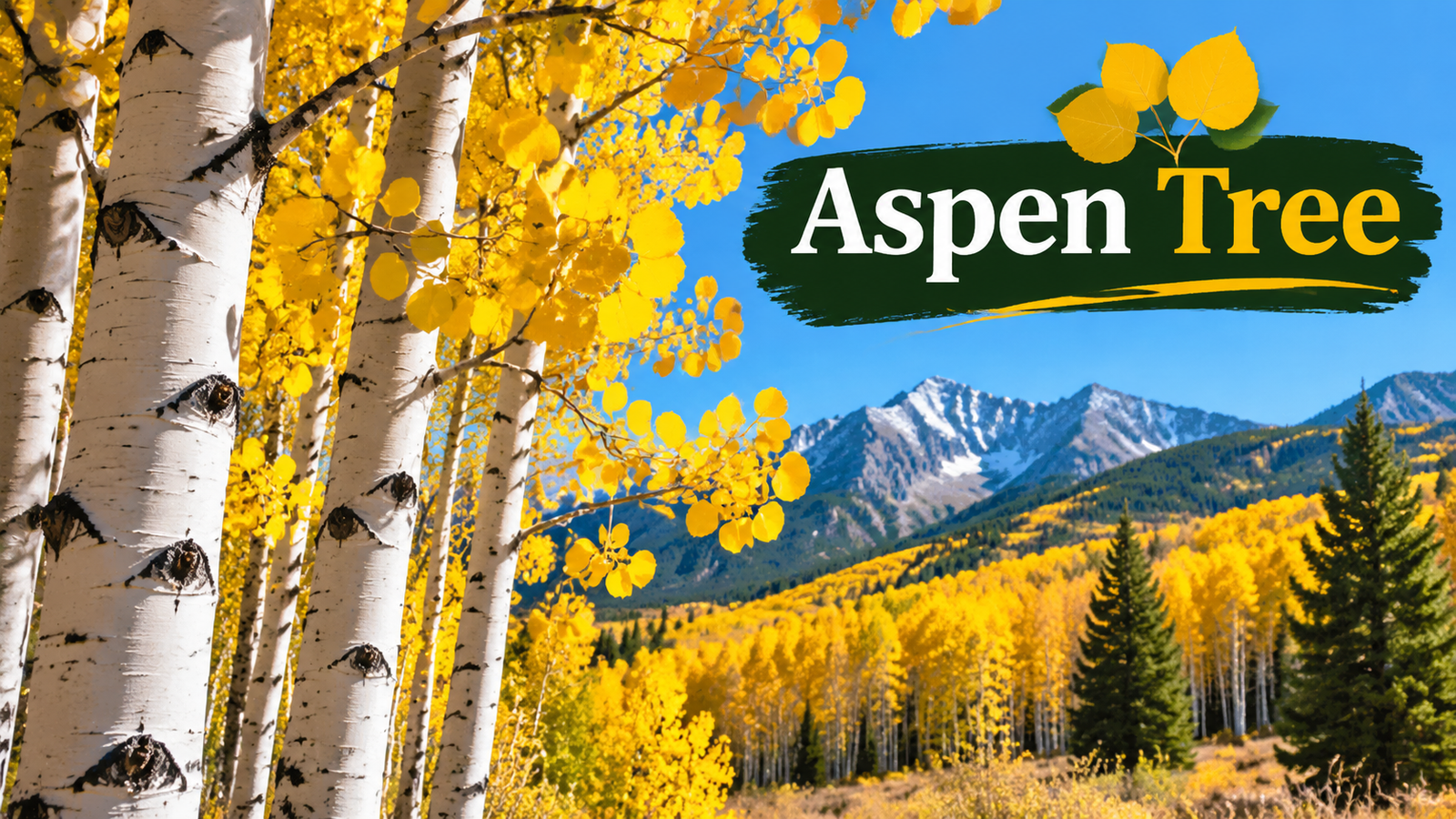



The aspen tree is one of the most recognizable and fascinating trees found across North America and other parts of the world. Known for its beautiful white bark, delicate leaves, and spectacular golden colors during autumn, this tree adds natural beauty to forests, mountains, parks, and residential landscapes. Its appearance may seem simple at first, but the aspen has an interesting biological structure and plays an important role in maintaining healthy ecosystems.
One of the most distinctive features of an aspen tree is the way its leaves move in even the slightest breeze. Their flattened stems allow them to tremble and create a gentle rustling sound, which is why certain aspen species are commonly called quaking aspens. This movement, combined with their bright green summer foliage and golden fall colors, makes them particularly attractive throughout the year.
Beyond their appearance, aspen trees provide food and shelter for wildlife, help protect soil, and contribute to forest regeneration. They are also popular among gardeners and property owners who appreciate their relatively fast growth and attractive appearance. Understanding how aspen trees grow, what they need, and why they matter can help anyone appreciate these remarkable trees more deeply.
What Is an Aspen Tree?
An aspen tree is a deciduous tree belonging to the genus Populus, which is part of the willow family, Salicaceae. Several species are commonly known as aspens, including quaking aspen, European aspen, and bigtooth aspen. These trees are generally recognized by their smooth bark, rounded or triangular leaves, and ability to grow in groups through underground root systems.
Aspens are native to different regions of the Northern Hemisphere, particularly North America, Europe, and parts of Asia. They commonly grow in mountainous areas, forest openings, valleys, and regions with cool or temperate climates. Although individual trees may appear separate, many aspens are connected through a shared underground root system, allowing them to grow as part of a much larger colony.
The scientific name of the well-known quaking aspen is Populus tremuloides. It is especially famous for its shimmering leaves and extensive root networks. Another familiar species is the European aspen, scientifically known as Populus tremula. While these species share several characteristics, they differ in their natural distribution, leaf shape, and certain growth habits.
Physical Characteristics of an Aspen Tree
Aspen trees have several physical features that make them relatively easy to identify. Their most recognizable characteristic is their bark, which is often smooth and pale white or greenish-white when young. As the tree matures, the lower trunk may develop darker markings, rough patches, and noticeable scars. These features give aspen forests their distinctive appearance.
The leaves are another important identifying feature. Depending on the species, they may be round, oval, or slightly triangular, with finely toothed edges. Most aspen leaves have flattened leaf stalks, which allow them to move easily in the wind. During spring and summer, the leaves usually display a fresh green color before turning brilliant shades of yellow and gold in autumn.
The size of an aspen tree depends on its species, growing conditions, and age. Many quaking aspens reach approximately 40 to 60 feet in height, although some can grow taller under favorable conditions. Their trunks are generally straight, and their crowns often form an attractive rounded shape. These characteristics make aspens visually appealing in natural forests and carefully planned landscapes.
Where Do Aspen Trees Grow?
Aspen trees naturally grow across large parts of North America, Europe, and Asia. In North America, quaking aspens are particularly common throughout Canada and the northern and western United States. They are frequently found in the Rocky Mountains, Great Lakes region, and other areas with suitable soil moisture and temperatures.
These trees generally prefer cool climates and are often associated with mountainous landscapes. They can grow at different elevations, from relatively low valleys to high mountain environments. Aspen forests are especially common in places where sunlight reaches the forest floor, including areas recovering from wildfires, logging, or other disturbances.
Although aspens can adapt to different soil conditions, they usually grow best in moist, well-drained soil. They may struggle in extremely dry locations or areas where water remains around their roots for extended periods. Access to sunlight is also important, as young aspen trees generally establish themselves more successfully in open environments than beneath dense forest canopies.
How Fast Does an Aspen Tree Grow?
Aspen trees are generally considered fast-growing trees, especially when they have access to sufficient sunlight, water, and suitable soil. Under favorable conditions, young trees may grow several feet in height each year. Their growth rate can vary significantly depending on the species, local climate, soil quality, and availability of moisture.
One reason aspens are successful in many natural environments is their ability to regenerate through root suckers. Instead of relying entirely on seeds, established trees can produce new shoots from their underground roots. These shoots develop into young trees and gradually form dense groups known as clones or colonies.
However, fast growth does not necessarily mean that every aspen tree will have a long individual lifespan. Many individual trunks live for several decades, although their underground root systems may survive much longer. Some aspen colonies have continued regenerating for thousands of years, making them remarkable examples of long-term plant survival.
Why Aspen Trees Have White Bark
The white bark of an aspen tree is one of its most distinctive features. It helps the tree stand out in wooded landscapes, particularly during winter when its branches are covered with snow. The bark may appear almost completely white on young trunks, while older trees often develop darker scars and rough areas near the base.
The pale color is associated with compounds in the bark, including chlorophyll-related pigments and other protective substances. The bark also plays a role in protecting the living tissues underneath from environmental damage. Its appearance is not simply decorative; it is part of the tree’s natural adaptation to its surroundings.
Aspen bark can also provide clues about the health and age of a tree. Smooth, relatively unbroken bark is common on younger trunks, while mature trees may show scars from animals, branches, and environmental exposure. Observing these details can help distinguish aspens from other trees with similar leaf shapes.
Different Types of Aspen Trees
Although people often use the term aspen tree to describe one particular species, several trees belong to the aspen group. They share general characteristics but have different distributions, leaf structures, and environmental preferences.
Quaking Aspen
Quaking aspen (Populus tremuloides) is one of the best-known aspen species in North America. Its rounded leaves have flattened stalks that allow them to tremble in the wind. This movement creates the characteristic sound associated with aspen forests.
The species is widely distributed across Canada, the United States, and parts of northern Mexico. It grows in different environments, including mountain slopes, forest edges, and open woodland areas. Its bright white bark and golden autumn foliage make it especially popular among nature enthusiasts and photographers.
European Aspen
European aspen (Populus tremula) is native to much of Europe and extends into parts of Asia. It is a hardy tree that can grow in forests, open landscapes, and areas with varying environmental conditions. Its leaves are generally rounded and move noticeably when exposed to wind.
This species is valued for its ability to colonize disturbed areas and contribute to woodland regeneration. It also provides habitat and food for different insects and animals. Like other aspens, it can reproduce through seeds and underground root suckers.
Bigtooth Aspen
Bigtooth aspen (Populus grandidentata) is native to eastern North America. It gets its common name from the relatively large teeth along the edges of its leaves. Compared with quaking aspen, its leaves are often larger and have a more noticeably irregular outline.
Bigtooth aspen typically grows in open forests, woodland areas, and locations recovering from disturbances. It can develop into a medium-sized tree and is recognized by its pale bark and attractive seasonal foliage. Its ability to establish itself in changing environments makes it an important part of many eastern forest ecosystems.
Why Aspen Leaves Tremble in the Wind
The trembling movement of aspen leaves is not just an interesting visual feature. It happens because the leaf stalks, known as petioles, are flattened rather than rounded. This structure allows the leaves to move back and forth easily when even a gentle breeze passes through the branches.
The movement gives aspen trees their familiar nickname, quaking trees. When many trees grow together, their leaves create a continuous rustling sound that can be heard throughout the forest. This natural sound is particularly noticeable during breezy summer afternoons.
The movement may also influence how leaves interact with sunlight and their surrounding environment. However, the main reason for their distinctive motion is their leaf-stalk structure. It is one of the easiest ways to recognize quaking aspen trees, even when their bark and other features are difficult to observe from a distance.
The Importance of Aspen Trees in the Environment
Aspen trees play an important role in maintaining healthy natural ecosystems. Their leaves, branches, bark, and roots support different forms of wildlife and contribute to the structure of forest environments. Because they can grow quickly and regenerate after disturbances, they are also important during natural forest recovery.
Their root systems help stabilize soil and reduce erosion, particularly on slopes and in areas exposed to seasonal rainfall or snowmelt. By holding soil in place, aspen trees can contribute to healthier landscapes and help maintain suitable conditions for other plants.
Aspen forests also support biodiversity by creating habitats for birds, mammals, insects, and smaller organisms. Their presence can make forest environments more varied, providing food and shelter for species that may not thrive in areas dominated by other tree types.
Wildlife That Depends on Aspen Trees
Aspen trees provide valuable resources for many animals. Their leaves, bark, twigs, and young shoots are eaten by herbivores such as deer, elk, and moose. These animals often browse on young branches, particularly during seasons when other food sources become less available.
Birds also benefit from aspen forests. Different species use the trees for nesting, shelter, and feeding. Woodpeckers, for example, may excavate cavities in older or damaged trunks, creating nesting spaces that can later be used by other birds and small mammals.
Insects and other small organisms also depend on aspens. Their leaves support various caterpillars and other insects, which become food for birds and larger wildlife. This relationship shows how one tree species can support an entire network of living organisms within a forest ecosystem.
Aspen Trees During Different Seasons
Aspen trees are attractive throughout the year because their appearance changes with the seasons. Each stage of the year reveals something different about their growth, structure, and relationship with the surrounding environment.
During spring, new leaves begin to emerge, creating fresh green growth across the branches. Small flowers, known as catkins, usually appear before or around the time the leaves develop. These flowers help the tree reproduce by producing pollen and eventually seeds.
Summer brings a full canopy of green foliage. The leaves move constantly in the breeze, creating the familiar shimmering effect that makes aspen forests so recognizable. During autumn, the leaves turn brilliant shades of yellow and gold, often producing one of the most beautiful seasonal displays in mountainous regions.
In winter, aspen trees lose their leaves and reveal their pale trunks and branching structures. Their white bark creates a striking contrast against snow-covered landscapes. Even without foliage, these trees remain visually distinctive and contribute to the character of winter forests.
How to Plant an Aspen Tree
Planting an aspen tree successfully starts with selecting a suitable location. These trees generally prefer areas with plenty of sunlight and soil that retains some moisture without becoming waterlogged. Before planting, consider the mature size of the tree and the possibility of underground root suckers spreading beyond its original location.
Choose a healthy nursery-grown sapling and prepare a planting hole that is wider than the root ball but not excessively deep. Position the tree so that the upper surface of the root ball sits level with the surrounding ground. Carefully fill the hole with the original soil and water thoroughly to help settle the roots.
After planting, apply a layer of organic mulch around the base to help maintain soil moisture and reduce competition from weeds. Keep mulch away from direct contact with the trunk to reduce the risk of moisture-related bark problems. Regular watering during the establishment period is particularly important, especially in locations with warm or dry weather.
How to Care for an Aspen Tree
Proper care helps young aspen trees establish strong root systems and develop healthy foliage. Watering is one of the most important responsibilities, particularly during the first few growing seasons. The soil should remain reasonably moist, but excessive watering should be avoided because poorly drained conditions can damage the roots.
Pruning should focus on removing dead, damaged, or diseased branches. The best approach is to use clean, sharp tools and avoid removing too much healthy growth at once. Heavy pruning is rarely necessary for a naturally growing aspen, and unnecessary cutting may increase stress or create opportunities for disease.
Mulching and occasional soil monitoring can also support healthy growth. A layer of organic mulch helps regulate soil temperature and retain moisture, while checking the surrounding area allows gardeners to identify unwanted root suckers. Because aspens naturally spread through underground roots, managing their growth may be necessary in smaller residential landscapes.
Common Problems and Diseases Affecting Aspen Trees
Although aspen trees are adaptable, they can experience several health problems. Leaf diseases, fungal infections, insect damage, and environmental stress can affect their appearance and overall growth. Recognizing early warning signs makes it easier to identify problems and take appropriate action.
Marssonina leaf spot is one fungal disease that can affect aspen foliage. It may produce dark spots on leaves, followed by premature leaf drop when infections become severe. Other fungal problems can affect branches and trunks, sometimes creating cankers or areas of dead tissue.
Insects can also cause damage. Aspen leaf miners, caterpillars, borers, and other pests may feed on leaves or weaken branches. Environmental stress is another common concern, particularly when trees experience prolonged drought, poor soil drainage, or physical damage. Maintaining suitable growing conditions is generally the best starting point for keeping aspens healthy.
Benefits of Growing Aspen Trees
One of the biggest benefits of growing aspen trees is their attractive appearance. Their pale trunks, fluttering green leaves, and golden autumn colors can make gardens and landscapes more visually interesting. They are especially appealing in natural-style gardens and larger properties where there is enough space for their root systems to develop.
Aspens also provide shade and support local wildlife. Their canopies can create cooler areas during warmer months, while their branches and leaves offer food and shelter to different species. Planting suitable native trees can also contribute to local biodiversity and support healthier outdoor environments.
Another advantage is their ability to regenerate relatively quickly. Aspen trees can establish themselves in suitable conditions and spread through root suckers, creating groups of trees over time. This makes them valuable in natural restoration projects, although their spreading habit should be considered before planting them near buildings, pathways, or underground infrastructure.
Interesting Facts About Aspen Trees
Aspen trees have several fascinating characteristics that make them different from many other tree species. One of the most remarkable facts is that large groups of aspens may actually be connected underground. Although individual trunks look like separate trees, they can share the same genetic identity and root system.
A famous example is Pando, a massive quaking aspen colony in Utah, United States. It consists of genetically identical stems connected by an extensive underground root system. Pando is often described as one of the largest and oldest known living organisms by mass, demonstrating how impressive aspen colonies can become.
Another interesting fact is that aspens are among the trees that can regenerate successfully after certain disturbances. Following a wildfire or other damage, surviving underground roots may produce new shoots. This ability helps aspens return to affected landscapes and provides opportunities for other plants and animals to recolonize recovering areas.
Are Aspen Trees Suitable for Residential Gardens?
Aspen trees can be attractive additions to residential gardens, particularly when homeowners have enough outdoor space. Their fast growth and seasonal appearance make them appealing choices for properties that need natural shade and visual interest. They can also create a woodland atmosphere when planted in suitable groups.
However, their spreading root systems require careful consideration. Root suckers may appear some distance from the original tree, creating additional growth that needs to be managed. In smaller gardens, this can become inconvenient, particularly when trees are planted near lawns, flower beds, driveways, or underground utility lines.
Before planting an aspen, consider the local climate, available space, soil conditions, and the mature dimensions of the selected species. Choosing a suitable planting location can prevent future maintenance problems and allow the tree to develop naturally. For smaller properties, a less spreading ornamental tree may be a more practical option.
Conclusion
The aspen tree is much more than an attractive woodland species. Its beautiful white bark, trembling leaves, fast growth, and brilliant autumn colors make it one of the most recognizable trees in many parts of the Northern Hemisphere. Whether growing individually or as part of a large colony, aspens contribute significantly to the appearance and ecological health of their surroundings.
Their ability to reproduce through underground roots, support wildlife, stabilize soil, and recover after environmental disturbances makes them especially valuable in natural ecosystems. At the same time, their attractive seasonal appearance makes them appealing to gardeners, landscapers, and nature enthusiasts.
(FAQs)
What is an aspen tree?
An aspen tree is a deciduous tree known for its smooth white bark, trembling leaves, and beautiful golden autumn foliage.
Where do aspen trees grow naturally?
Aspen trees naturally grow across North America, Europe, and parts of Asia, particularly in mountainous regions, forests, and cool climates.
How fast does an aspen tree grow?
Aspen trees are relatively fast-growing and can grow several feet annually under favorable conditions, depending on the species and environment.
Why do aspen tree leaves shake?
Aspen leaves shake because their flattened leaf stalks allow them to move easily in even gentle winds, creating their characteristic trembling appearance.
How long do aspen trees live?
Individual aspen trunks commonly live for several decades, while connected root colonies can survive for hundreds or even thousands of years.