





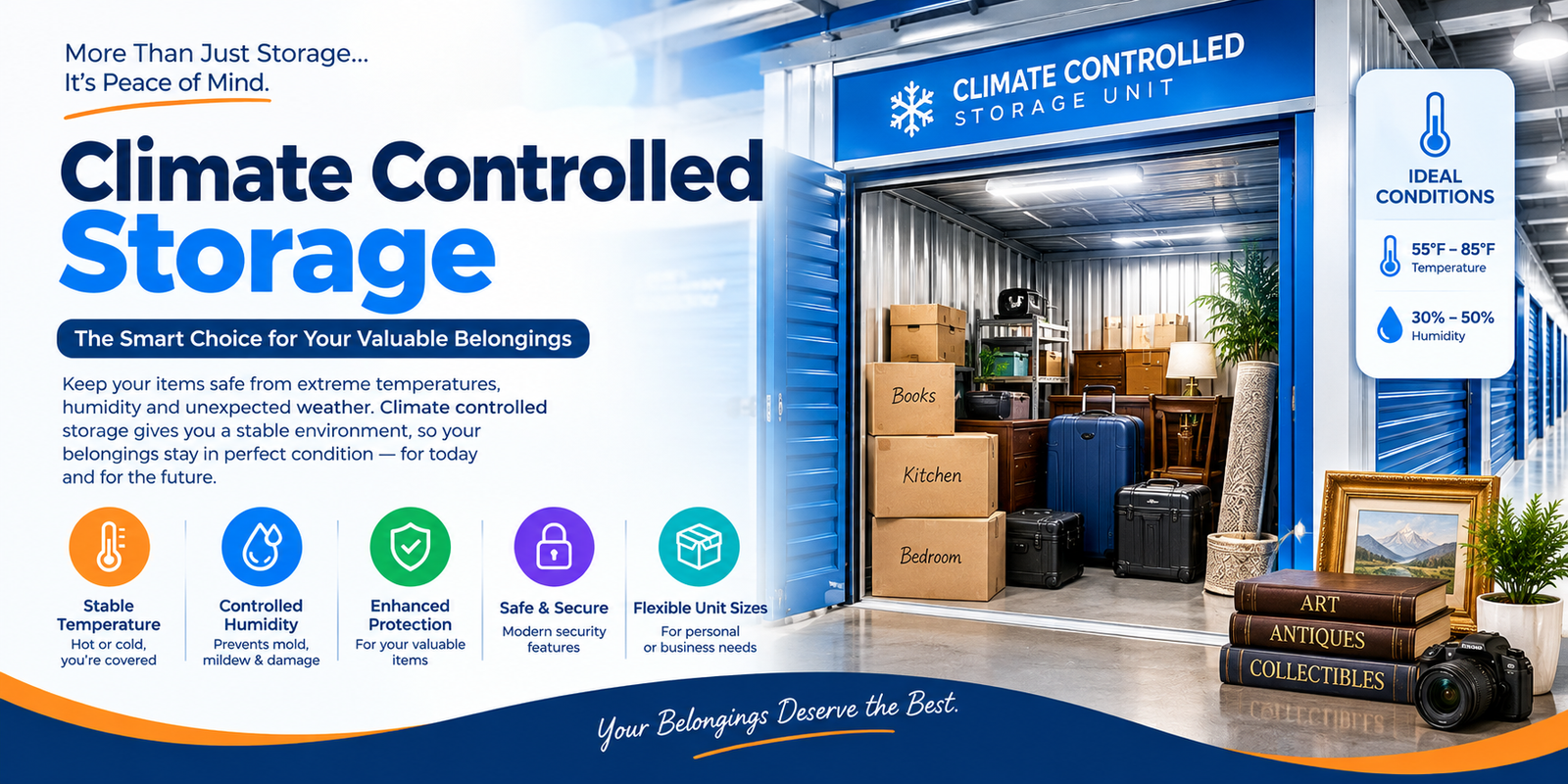
Climate controlled storage is becoming an increasingly popular choice for people who want to protect their belongings from extreme temperatures, humidity, and changing weather conditions. Whether you are moving to a new home, renovating your property, managing business inventory, or simply trying to create more space, the right storage environment can make a significant difference. While traditional storage units work well for many everyday items, certain belongings require extra care to maintain their condition over time.
Imagine storing a beautiful wooden dining table, expensive electronics, important documents, or family photographs for several months. Without suitable environmental conditions, these items may experience damage caused by excessive heat, moisture, or temperature fluctuations. Climate controlled storage helps minimize these risks by maintaining a more stable indoor environment, making it a practical option for people with valuable or sensitive possessions.
However, choosing the right storage solution involves more than simply selecting a unit with temperature control. You also need to consider the cost, security, unit size, facility maintenance, and the specific requirements of your belongings. In this guide, we will explore the benefits of climate controlled storage, explain how it works, discuss its costs, and share practical tips for protecting your possessions throughout the storage period.
What Is Climate Controlled Storage?
Climate controlled storage refers to a storage unit or facility designed to maintain more consistent indoor environmental conditions than a conventional storage space. Depending on the provider, this may include temperature regulation, humidity management, or both. These systems help reduce the impact of outdoor weather on the items kept inside the unit.
Traditional storage units generally provide a secure place to store belongings, but their internal temperatures can change significantly with the seasons. During summer, the temperature inside an outdoor metal unit may rise considerably, especially when exposed to direct sunlight. During winter, the same unit may become very cold. Humidity can also fluctuate, potentially creating problems for materials that are sensitive to moisture.
Climate controlled storage is designed to limit these environmental changes. Facilities may use heating, air conditioning, insulation, ventilation, and dedicated humidity control equipment to maintain more stable conditions. The exact setup varies between providers, so it is important to understand what a particular facility actually offers before renting a unit.
Another important consideration is that climate controlled storage does not necessarily mean every unit maintains identical conditions. Some facilities regulate temperature but do not actively control humidity, while others provide more comprehensive environmental management. If you plan to store delicate belongings, ask about the facility’s normal temperature and relative humidity ranges to ensure they meet your needs.
How Does Climate Controlled Storage Work?
Climate controlled storage uses specialized equipment and building design to help maintain a consistent indoor environment. Heating systems help prevent temperatures from dropping too low, while air conditioning can reduce excessive heat during warmer months. Insulation and enclosed construction further help limit the influence of outdoor weather.
Temperature regulation is particularly useful for belongings that may react to repeated heating and cooling. Wood can expand or contract, certain plastics may soften, and some adhesives can weaken when exposed to unsuitable temperatures. Electronics may also be affected by excessive heat, especially when combined with poor ventilation or prolonged exposure.
Humidity management is equally important. Relative humidity describes the amount of moisture in the air compared with the maximum amount the air can hold at a given temperature. When humidity remains high, some materials may absorb moisture, while metal components may become more susceptible to corrosion. Under suitable conditions, damp environments can also encourage mold and mildew growth.
Facilities with dedicated humidity control may use dehumidifiers or integrated HVAC systems to help maintain appropriate moisture levels. However, not every climate controlled facility provides precise humidity regulation. Ask whether humidity is actively monitored, what typical conditions are maintained, and how the facility responds to equipment failures or unusual weather.
The Major Benefits of Climate Controlled Storage
One of the most important benefits of climate controlled storage is the added protection it can provide against extreme temperatures. Belongings such as wooden furniture, electronics, artwork, and certain household materials may deteriorate when exposed to repeated temperature fluctuations. A more stable indoor environment can help reduce these environmental stresses.
Another advantage is the potential reduction in moisture-related problems. Excessive humidity can contribute to musty odors, corrosion, mold, and mildew when other necessary conditions are present. A facility that effectively manages humidity can help reduce these risks, especially when belongings are clean, dry, and packed appropriately before storage.
Climate controlled storage can also be useful for long-term storage projects. If you need to store possessions for several months or longer, maintaining a suitable environment may help preserve their condition. This can be particularly important for valuable collections, family heirlooms, musical instruments, important paperwork, and other items that may be difficult to replace.
Convenience is another benefit. Many climate controlled facilities are located inside enclosed buildings, which may offer protection from direct sunlight, wind-driven rain, and outdoor temperature changes. Indoor corridors and building access can also make moving belongings more comfortable during extreme weather. Nevertheless, these additional features vary by facility, so it is wise to check the available amenities before making a decision.
Which Belongings Need Climate Controlled Storage?
Wooden Furniture and Antiques
Wooden furniture can respond to changes in temperature and humidity because wood naturally absorbs and releases moisture. These changes may cause the material to expand, contract, crack, or warp. Over time, unstable environmental conditions can affect the appearance and structure of tables, cabinets, chairs, desks, and other wooden possessions.
Antique furniture may require additional attention because of its age, construction, finishes, and previous repairs. Veneers, decorative details, and older adhesives can be particularly sensitive to environmental changes. Climate controlled storage may help reduce these risks, although valuable antiques may require more specialized preservation conditions.
Before storing furniture, clean it gently and allow it to dry completely. Remove items from drawers, protect delicate surfaces with appropriate materials, and avoid wrapping wooden pieces tightly in plastic. Whenever possible, disassemble larger furniture according to the manufacturer’s instructions and store its hardware in labeled bags.
Electronics and Appliances
Electronic equipment such as computers, televisions, cameras, gaming consoles, and audio systems can be affected by excessive heat and moisture. High temperatures may contribute to component deterioration, while moisture can increase the risk of corrosion. Condensation may also occur when equipment moves between environments with different temperatures and humidity levels.
Climate controlled storage can provide a more suitable environment for electronics, particularly when they will remain unused for an extended period. However, environmental control alone does not eliminate every risk. Dust, accidental impacts, improper packing, and battery deterioration can still affect the condition of electronic devices.
Before packing electronics, disconnect cables and accessories, clean the equipment carefully, and use suitable protective packaging. Follow the manufacturer’s instructions for battery removal and long-term storage. If a device contains a damaged or swollen battery, do not treat it as an ordinary storage item; follow the appropriate battery safety guidance instead.
Clothing, Fabrics, and Leather Products
Clothing, bedding, curtains, leather accessories, and upholstered furniture can absorb moisture and develop unpleasant odors when stored in unsuitable conditions. Natural fabrics and leather may be especially sensitive to prolonged humidity, while excessive heat can affect certain dyes, finishes, and adhesives.
A climate controlled unit can be helpful for storing seasonal clothing, wedding outfits, expensive handbags, leather jackets, and delicate textiles. It may also provide a more appropriate environment for vintage garments and family clothing with sentimental value.
Preparation is essential for keeping these items in good condition. Wash or clean clothing before storage, ensure everything is completely dry, and use breathable garment covers when appropriate. Avoid compressing delicate fabrics for extended periods, and follow the care instructions for leather products. Never place damp clothing or upholstery into sealed containers.
Documents, Books, and Photographs
Paper-based materials are vulnerable to unsuitable environmental conditions. Books may develop warped pages or musty odors, while photographs, certificates, business records, and historical documents can deteriorate when exposed to excessive heat or moisture.
Climate controlled storage can help reduce environmental fluctuations that contribute to paper damage. It is often worth considering for personal archives, business paperwork, collectible books, photographs, and printed artwork that needs additional protection.
For better preservation, use archival-quality folders, sleeves, and boxes suited to the materials being stored. Keep important documents away from floors and areas where moisture may accumulate. Consider creating secure digital copies of essential records and family photographs so you have an additional backup if physical documents are damaged or lost.
Climate Controlled Storage vs. Traditional Storage
Traditional storage units can be a suitable option for belongings that tolerate normal seasonal changes. Examples include many outdoor tools, weather-resistant furniture, sturdy plastic containers, and durable equipment that does not require closely managed environmental conditions.
Climate controlled storage is generally more appropriate for sensitive items that may be affected by temperature fluctuations or humidity. Wooden furniture, electronics, photographs, musical instruments, artwork, and certain collectibles can benefit from a more stable environment. The longer these items remain stored, the more important it may become to evaluate their environmental requirements.
The main disadvantage of climate controlled storage is that it often costs more than a conventional unit. Facilities must operate and maintain equipment that regulates indoor conditions, and these expenses can affect rental prices. However, the additional cost may be reasonable if the belongings would be expensive to repair or replace.
The best option depends on the items you intend to store, the local climate, the expected rental period, and your budget. Rather than automatically choosing the cheapest unit, consider the potential consequences of damage and whether the additional environmental protection provides worthwhile value.
How Much Does Climate Controlled Storage Cost?
The cost of climate controlled storage varies according to several factors, including location, unit size, facility features, local demand, and rental duration. A small unit may be sufficient for boxes, clothing, and a few delicate possessions, while larger units may be needed for furniture, business inventory, or the contents of an entire home.
Location can have a substantial influence on pricing. Storage facilities in busy metropolitan areas may charge more than comparable facilities in smaller towns. Seasonal demand can also affect rates, particularly during popular moving periods when people are looking for temporary storage.
The level of environmental management can influence cost as well. A facility that actively regulates both temperature and humidity may have different operating expenses from one that primarily controls temperature. Additional amenities, including enhanced security, extended access hours, and specialized storage services, may also affect the final price.
When comparing facilities, look beyond the advertised monthly rate. Ask about administration fees, deposits, insurance requirements, promotional pricing, and potential rent increases. Find out whether climate control is included in the quoted price and whether any additional charges apply.
The most cost-effective choice is the one that meets your storage requirements without unnecessary expenses. Paying more for a suitable environment may be worthwhile for sensitive belongings, while a basic unit may be sufficient for durable items that can tolerate seasonal conditions.
How to Choose the Right Climate Controlled Storage Facility
Climate Controlled Storage the right facility starts with identifying your storage needs. Make a list of the items you plan to store, estimate the required space, and identify belongings that are particularly sensitive to heat or moisture. This will help you determine which environmental features are important and what unit size will work best.
Next, ask specific questions about temperature and humidity management. Find out whether the facility actively controls both factors, what typical conditions it maintains, and how often environmental systems are inspected. If you are storing valuable artwork, instruments, or sensitive collections, consider whether the facility can accommodate their particular preservation requirements.
Security should also be a major consideration. Look for controlled access, surveillance cameras, good lighting, secure unit locks, and clear procedures for entering the building. Ask how the facility handles maintenance issues, water leaks, pest problems, power interruptions, and equipment failures that could affect stored belongings.
Finally, review the rental agreement carefully. Check the monthly rate, minimum rental period, access hours, insurance requirements, payment terms, and cancellation policies. If possible, visit the facility before signing the agreement. A personal inspection can help you evaluate cleanliness, maintenance, security, and the general condition of the storage areas.
Practical Tips for Protecting Your Belongings in Storage
Proper preparation can make a substantial difference in how well your belongings survive a storage period. Begin by cleaning everything thoroughly and ensuring all items are completely dry. Dirt, food residue, and moisture can attract pests or contribute to unpleasant odors, even when the facility offers environmental controls.
Choose packing materials according to the items being stored. Strong boxes, suitable plastic containers, protective padding, and breathable covers can help prevent physical damage. Delicate documents and collectibles may require archival-quality materials, while furniture may benefit from soft protective coverings that do not trap moisture.
Organize the unit to make retrieval easy and reduce the risk of accidental damage. Leave space between boxes and walls, avoid stacking heavy objects on fragile items, and use shelves or pallets where permitted to keep possessions raised off the floor. Store frequently needed belongings near the entrance so you do not have to move everything whenever you need access.
Creating an inventory is another useful step. Record the contents of each box, label containers clearly, and take photographs of valuable possessions before storing them. Keep a copy of the inventory somewhere outside the unit. This will make it easier to locate items and provide useful documentation if you ever need to submit an insurance claim.
It is also sensible to inspect your belongings periodically, especially during long-term storage. Check for unusual odors, signs of moisture, damaged packaging, or changes in the facility’s condition. Although regular visits cannot prevent every problem, they can help you identify concerns before they become more serious.
Common Mistakes to Avoid When Using Climate Controlled Storage
One common mistake is assuming that climate controlled storage guarantees complete protection. Environmental management can reduce certain risks, but it does not eliminate theft, physical damage, pests, water intrusion, or every possibility of deterioration. Proper packing, suitable insurance, and a well-maintained facility remain important.
Another mistake is placing damp belongings into storage. Moisture trapped inside a box, mattress, upholstered chair, or container can contribute to mold and unpleasant odors. Always inspect items before packing them, and allow them to dry fully. If belongings already show signs of mold, address the problem appropriately before placing them in a storage unit.
Overcrowding is another issue that can create unnecessary difficulties. A unit that is too small may leave little room to access boxes or move items safely. Fragile possessions can become damaged when heavy objects are stacked incorrectly, and tightly packed belongings may be more difficult to inspect. Choosing a suitable unit size is usually more practical than forcing everything into a cramped space.
Finally, do not ignore insurance and contract details. Storage facilities may have specific rules about liability, prohibited items, coverage limits, and customer responsibilities. Review the agreement carefully and confirm whether your homeowner’s or renter’s insurance covers belongings kept off-site. If additional coverage is necessary, compare the available options before storing valuable possessions.
Is Climate Controlled Storage Worth the Investment?
Climate controlled storage can be worth the additional expense when you need to protect items that are sensitive to extreme temperatures or humidity. It may be especially beneficial for valuable furniture, electronics, important paperwork, musical instruments, artwork, and collectibles that could deteriorate in an unsuitable environment.
The decision should be based on the value of your possessions, the local weather, and the length of time you expect to store them. Consider both financial and sentimental value. Some items may be inexpensive to replace but impossible to recover emotionally, such as family photographs, handwritten letters, or inherited belongings.
However, not every possession requires a climate controlled unit. Durable tools, weather-resistant outdoor equipment, and many basic household items may be perfectly suitable for conventional storage, provided the unit is secure and appropriately maintained. Paying for unnecessary features can increase your expenses without providing meaningful benefits for those particular belongings.
A practical approach is to divide your possessions into categories according to their environmental sensitivity. Store delicate or valuable items in a suitable climate controlled environment and use traditional storage for items that can tolerate normal seasonal conditions. This strategy can help you balance protection and affordability.
Final Thoughts
Climate controlled storage offers a practical way to reduce the effects of temperature fluctuations and excessive humidity on sensitive belongings. Whether you are preparing for a move, renovating your home, organizing a business, or storing possessions for the long term, choosing the right environment can help preserve the condition of your items.
The key is to understand what climate control actually includes, identify the needs of your belongings, and compare facilities based on environmental management, security, pricing, and convenience. Remember that temperature regulation and humidity control are not always the same service, so it is important to confirm the details before renting a unit.
With proper preparation, suitable packing materials, a clear inventory, and a well-maintained storage facility, you can reduce many common storage risks. By choosing a solution that matches your belongings and budget, you can enjoy greater peace of mind while keeping your valuable possessions organized and protected for the future.
FAQs
What is climate controlled storage?
Climate controlled storage is a storage solution designed to maintain more stable indoor temperatures and, in some facilities, humidity levels. It helps protect sensitive belongings such as wooden furniture, electronics, documents, clothing, and collectibles from environmental changes.
Is climate controlled storage worth the extra cost?
Yes, climate controlled storage can be worth the additional expense if you are storing valuable or temperature-sensitive items. It may help reduce the risk of damage caused by excessive heat, cold, or humidity. For durable items that tolerate seasonal changes, a traditional storage unit may be sufficient.
What items should be stored in a climate controlled unit?
Common items that may benefit from climate controlled storage include wooden furniture, antiques, electronics, photographs, important documents, musical instruments, artwork, leather products, and delicate fabrics. The best storage conditions depend on each item’s material and preservation requirements.
Does climate controlled storage prevent mold and mildew?
Climate controlled storage with effective humidity management can help reduce the risk of mold and mildew. However, it does not guarantee complete prevention. Belongings should be clean and completely dry before storage, and the facility should be checked for moisture problems.
How much does climate controlled storage cost?
The cost depends on the unit size, location, facility features, rental duration, and local demand. Climate controlled units generally cost more than traditional storage units. Compare monthly rates, additional fees, insurance requirements, and included services before choosing a facility.