


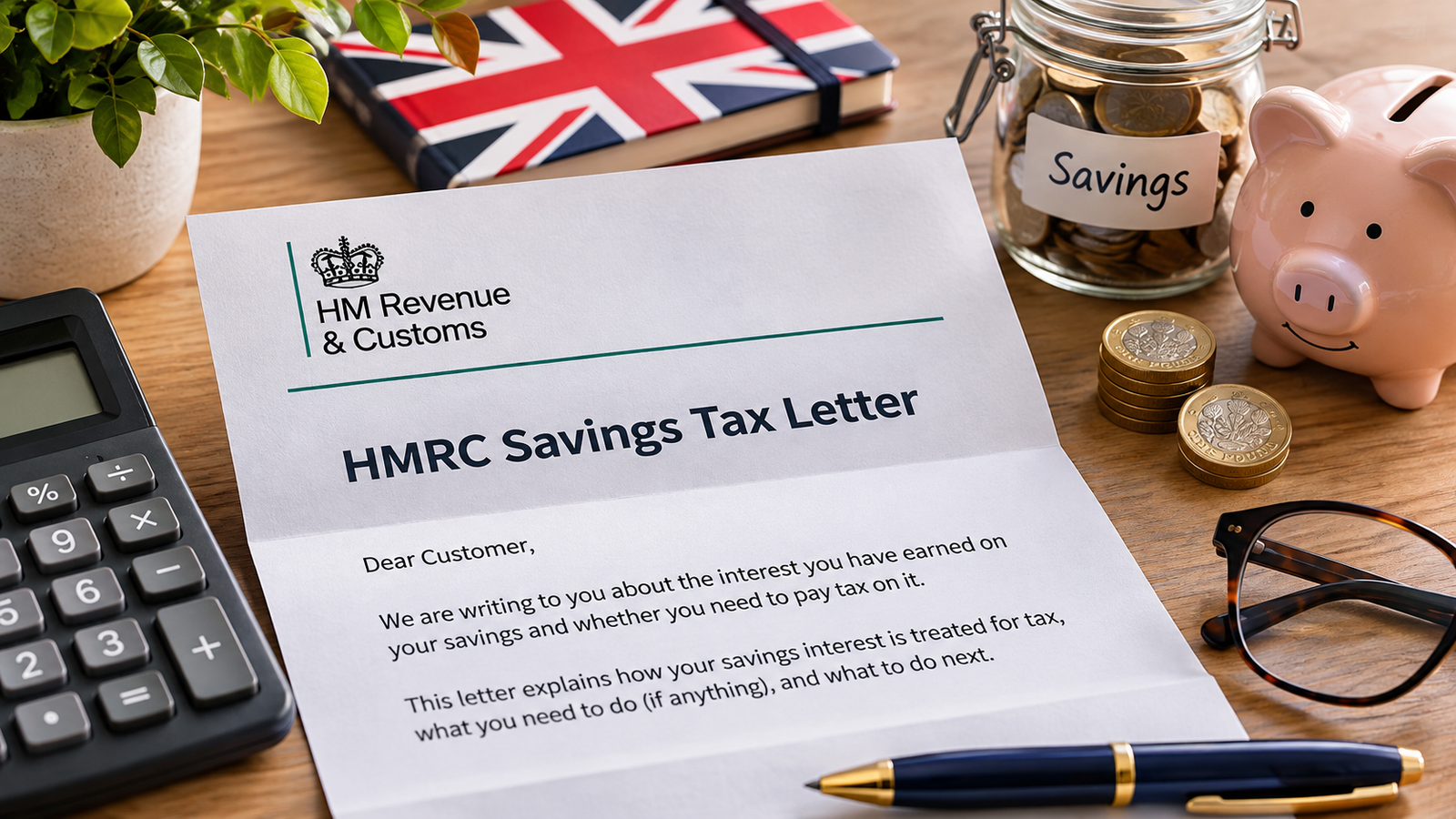

Receiving a letter from HMRC Savings Tax Letter about your savings can be confusing, especially if you have never thought of your bank interest as something you need to pay tax on. You might assume that money sitting in a savings account is automatically tax-free, or wonder why HM Revenue and Customs is contacting you when your bank has already paid the interest directly into your account.
The good news is that receiving an HMRC savings tax letter does not necessarily mean you have done anything wrong. In many cases, HMRC is simply informing you that the interest earned on your savings has exceeded your available tax-free allowances. The letter explains how much interest you received, whether additional tax is due and how you can settle the amount.
However, it is important not to ignore the letter. You should understand why HMRC has contacted you, check whether the figures are accurate and make sure you know what action is required. This guide explains what an HMRC savings tax letter means, who might receive one, how savings interest is taxed and what to do if you disagree with the calculation.
What Is an HMRC Savings Tax Letter?
An HMRC savings tax letter is a notification from HM Revenue and Customs explaining that you may owe Income Tax on the interest earned from your savings. Banks and building societies usually report the interest they pay to customers to HMRC after the end of each tax year. HMRC uses this information alongside your other taxable income to determine whether you have exceeded your available savings allowances.
The letter is generally a tax calculation rather than a warning or penalty notice. It explains the amount of savings interest HMRC believes you received during the previous tax year and whether any additional Income Tax needs to be paid. You may also receive information about how HMRC intends to collect the tax, such as through an adjustment to your PAYE tax code.
Not everyone who earns interest on savings receives this letter. If your total interest falls within your available tax-free allowances, you generally will not have additional savings tax to pay. However, people whose interest exceeds those allowances may receive a calculation showing the difference. HMRC may send this information by post or make it available through their Personal Tax Account.
Why Have You Received a Letter From HMRC About Your Savings?
One of the most common reasons for receiving an HMRC Savings Tax Letter savings tax letter is earning more interest than your available tax-free allowances permit. This can happen when interest rates increase, you move money into a higher-interest savings account or you build up a larger savings balance. Even if your savings have remained untouched for years, a change in interest rates can increase your annual interest income.
Another reason is that HMRC has received information from your bank or building society showing interest payments that were not previously included in your tax calculations. Financial institutions report savings interest after the tax year ends, allowing HMRC to compare that information with your employment, pension and other taxable income. If the combined figures indicate that you owe tax, HMRC may contact you with an updated calculation.
You might also receive a letter because your tax code needs adjusting. For example, if HMRC believes you will continue earning a similar amount of interest in the current tax year, it may include an estimated savings interest figure in your PAYE tax code. This helps collect the expected tax through your salary or pension rather than leaving the entire amount until the following year.
Importantly, receiving a letter does not automatically mean HMRC Savings Tax Letter has calculated everything correctly. Banks can report incorrect information, accounts may have been closed, and joint-account interest may need checking. Always compare the figures in your letter with your own financial records before accepting the calculation.
How Much Savings Interest Can You Earn Before Paying Tax?
The amount of savings interest you can earn without paying Income Tax depends on your overall income and the allowances available to you. The UK tax system provides three main allowances that can reduce or eliminate the tax due on savings interest: the Personal Allowance, the Starting Rate for Savings and the Personal Savings Allowance.
The Personal Allowance is the amount of income most people can receive before paying Income Tax. For the 2026/27 tax year, the standard Personal Allowance is £12,570. If your wages, pension or other taxable income do not use the full allowance, the remaining amount may be available to cover savings interest. This means some people can earn interest without paying tax even if they have exceeded the separate Personal Savings Allowance.
The Starting Rate for Savings can provide an additional tax-free allowance of up to £5,000. However, it is generally available only when your other taxable income, excluding savings interest and dividends, is below £17,570. Every pound of other income above your Personal Allowance reduces the available starting rate by one pound.
There is also the Personal Savings Allowance (PSA), which depends on your Income Tax band:
| Income Tax band | Personal Savings Allowance |
|---|---|
| Basic-rate taxpayer | £1,000 |
| Higher-rate taxpayer | £500 |
| Additional-rate taxpayer | £0 |
For example, imagine you are a basic-rate taxpayer and earn £1,300 in savings interest during a tax year. If your Personal Savings Allowance is £1,000 and you have no additional starting-rate allowance available, the remaining £300 may be taxable. At the basic rate of 20%, this would result in £60 of Income Tax.
These allowances apply to your overall eligible savings interest rather than separately to every bank account. If you have savings with three different banks, HMRC Savings Tax Letter generally adds the interest together when working out your tax liability.
What Information Does an HMRC Savings Tax Letter Savings Tax Letter Contain?
An HMRC savings tax letter normally provides details about the tax calculation and explains why the amount has been charged. The exact information depends on the type of notice you receive, but it may include the tax year being reviewed, your reported savings interest, your taxable income and the amount of Income Tax HMRC Savings Tax Letter believes remains outstanding.
You may also find a breakdown of interest received from individual banks and building societies. This is particularly useful if you have several savings accounts. Rather than looking at each account separately, HMRC combines the reported interest to calculate your overall savings income. Reviewing this breakdown can help you identify accounts you may have forgotten about or figures that do not match your statements.
The letter should also explain how HMRC intends to collect the outstanding amount. If you are employed or receive a pension, the tax may be collected through your PAYE tax code. If HMRC cannot collect the amount this way, you may receive a Simple Assessment explaining the amount due, how to pay and the relevant payment deadline.
Read the entire notice rather than looking only at the amount owed. Pay particular attention to the tax year, interest figures, payment instructions and any deadline. These details determine whether you need to take immediate action or simply check the calculation.
How Does HMRC Savings Tax Letter Collect Tax on Savings Interest?
HMRC Savings Tax Letter generally collects tax on savings interest differently depending on how much interest you earned and whether you complete a Self Assessment tax return. For savings interest of £10,000 or less, banks and building societies normally report the information directly to HMRC after the tax year ends. If you are employed or receive a pension and owe additional tax, HMRC will usually issue a tax calculation.
One common collection method is an adjustment to your PAYE tax code. HMRC can reduce your tax-free pay allowance so that additional Income Tax is collected through your salary or pension payments. You may notice that your take-home pay changes even though your employer has not increased your salary or made any other changes to your employment arrangement.
If you do not have a suitable PAYE tax code, or HMRC cannot collect the amount through your salary or pension, you may receive a Simple Assessment letter. This notice explains how much you owe and provides instructions for making the payment. You should follow the deadline stated in the letter rather than assuming the tax will automatically be deducted from your bank account.
People who already complete Self Assessment should normally report their savings interest on their tax return. If your savings interest exceeds £10,000, HMRC says you must report it through Self Assessment and may issue a notice requiring you to complete a return if you are not already registered.
What Should You Do After Receiving an HMRC Savings Tax Letter Savings Tax Letter?
The first step is to establish exactly what HMRC Savings Tax Letter is asking you to do. Check the tax year mentioned in the letter and identify whether it is a tax calculation, a PAYE tax code notification or a Simple Assessment. These documents serve different purposes, so understanding which one you have received will help you decide what to do next.
Next, check the savings interest figures against your bank and building society statements. Add together the interest paid into your eligible savings accounts during the relevant tax year. Remember that the UK tax year runs from 6 April to 5 April, so your calendar-year bank statements may not match the period used by HMRC. If you have a joint account, HMRC normally allocates the interest equally between the account holders.
After checking the figures, compare your total savings interest with your available tax-free allowances. Consider your Personal Allowance, Starting Rate for Savings and Personal Savings Allowance rather than assuming that every pound of interest is taxable. If HMRC’s calculation is correct, follow the payment instructions or check your updated tax code to understand how the amount will be collected.
If something does not look right, contact HMRC and explain the discrepancy. You may need to provide supporting information from your bank, such as an annual interest certificate or account statements. Keep copies of your correspondence and relevant financial records so you can refer to them if HMRC Savings Tax Letter requests further information.
What If the Savings Interest Figures in Your Letter Are Incorrect?
It is worth checking every figure in an HMRC Savings Tax Letter savings tax calculation because even a relatively small reporting error can affect the amount of tax you owe. For example, your bank might have reported interest from an account that was closed during the year, or you may notice that the amount shown does not match the interest actually credited to your account.
Joint savings accounts are another area worth checking. HMRC generally splits interest equally between joint account holders. However, if you believe the reported allocation is incorrect, you should contact HMRC and explain the circumstances. You may need evidence showing how the interest should be allocated.
You should also check whether the letter includes an estimate for the current tax year rather than only actual interest from the previous year. HMRC may use previous savings interest information to estimate what you could earn during the current tax year. If your savings balance has reduced or your account now pays a lower interest rate, the estimate may be too high.
If the estimated amount in your tax code is incorrect, you can contact HMRC Savings Tax Letter to request an adjustment. You can check the estimated savings interest figure through your Personal Tax Account. Once HMRC reviews your information, it can update your tax code if necessary. If you have already paid too much tax, the refund may be arranged through your employer or pension provider.
Can You Claim a Refund If You Have Paid Too Much Savings Tax?
Yes, you may be able to claim a refund if HMRC Savings Tax Letter has collected more tax on your savings interest than you actually owe. This can happen when your bank reports incorrect interest figures, your tax-free allowances have not been applied correctly or your total taxable income is lower than HMRC originally calculated.
If the overpayment relates to the current tax year, start by checking your estimated savings interest in your Personal Tax Account. Compare it with your actual bank statements and contact HMRC if the estimate is inaccurate. HMRC can review the information and amend your tax code. If too much tax has already been collected through your salary or pension, the difference can be refunded through the relevant payment arrangements.
For previous tax years, the process depends on whether you complete Self Assessment. If you submit a tax return, you should normally claim the refund through your return. If you do not complete Self Assessment, you may be able to contact HMRC directly or use form R40 to claim a repayment of tax deducted from savings and investments.
There is a time limit to remember. HMRC generally allows claims for overpaid tax on savings interest within four years of the end of the tax year concerned. You should keep the relevant bank statements and evidence of tax deducted to support your claim. If you are unsure whether you qualify, check HMRC Savings Tax Letter official repayment guidance before submitting an application.
Is an HMRC Savings Tax Letter Genuine or Could It Be a Scam?
Not every letter or message claiming to be from HMRC is genuine. Tax-related scams often use official-looking logos, urgent language and threats of penalties to persuade people to share personal information or make payments. Since savings tax letters can involve unexpected bills, it is important to verify any communication before responding.
A genuine HMRC Savings Tax Letter tax calculation should provide information that relates to your actual tax position. You can compare the details with your Personal Tax Account and check whether the same tax calculation or notice is available there. If the letter asks you to pay money, do not automatically follow unfamiliar bank details or payment links simply because the message looks official.
Be particularly careful with emails and text messages claiming that you are entitled to an immediate tax refund. Fraudulent messages may ask you to provide your National Insurance number, bank account details, passwords or card information. HMRC advises people to report suspicious tax-related emails and text messages through its official reporting channels.
If you are unsure whether a letter is genuine, use the contact information published on GOV.UK rather than relying on a telephone number or link included in a suspicious message. Taking a few minutes to verify the communication can help protect your personal information and prevent unnecessary payments.
How Can You Avoid Unexpected Savings Tax Bills in the Future?
The simplest way to avoid unexpected savings tax bills is to keep track of how much interest your accounts generate throughout the year. If you have several savings accounts, review their interest rates and annual statements rather than focusing only on the balance in each account. A higher interest rate can make a noticeable difference to your annual savings income.
It is also worth understanding which savings products provide tax advantages. Interest earned within a qualifying Individual Savings Account (ISA) is generally free from UK Income Tax. This can make a Cash ISA useful for people who expect their savings interest to exceed their available Personal Savings Allowance. However, you should compare account rates, access conditions and other terms before moving your money.
Reviewing your tax code is another helpful habit, particularly if you are employed or receive a pension. HMRC Savings Tax Letter may use previous-year savings interest to estimate your current-year interest income. If your circumstances have changed, updating the estimate can help prevent an unnecessarily high tax deduction or an unexpected bill later.
Finally, keep your bank statements, annual interest summaries and HMRC correspondence organised. Having these records available makes it much easier to check a tax calculation, challenge incorrect figures or claim a refund. You do not need to be a tax expert to manage your savings tax effectively, but understanding your allowances and keeping accurate records can make a significant difference.
(FAQs)
Why has HMRC Savings Tax Letter sent me a letter about savings interest?
HMRC Savings Tax Letter may have received information from your bank or building society showing that you earned savings interest above your available tax-free allowances. It uses this information alongside your other taxable income to calculate whether additional Income Tax is due.
Do I have to pay tax on all my savings?
No. You generally pay tax on taxable savings interest above your available allowances, not on the money you have deposited into your savings account. Your Personal Allowance, Starting Rate for Savings and Personal Savings Allowance may reduce or eliminate the tax due.
When does HMRC Savings Tax Letter send savings tax letters?
HMRC Savings Tax Letter generally sends tax calculations after the end of the tax year, once banks and building societies have reported their interest information. For people who owe tax on savings interest, these calculations are usually issued between June and the end of November.
Can HMRC Savings Tax Letter take savings tax directly from my bank account?
HMRC Savings Tax Letter does not normally take savings tax directly from your savings account automatically. It may collect the amount through your PAYE tax code or issue a Simple Assessment with instructions for making payment.
What happens if I ignore an HMRC Savings Tax Letter savings tax letter?
Ignoring the letter can lead to missed payment deadlines and further action to collect outstanding tax. If you believe the calculation is wrong, contact HMRC Savings Tax Letter rather than leaving the notice unanswered. If the amount is correct, follow the payment instructions and deadline provided.
Can I receive an HMRC Savings Tax Letter savings tax letter even if I am retired?
Yes. Retirement does not automatically exempt you from tax on savings interest. If your pension and other taxable income, together with your savings interest, exceed your available allowances, you may still owe Income Tax and receive a calculation from HMRC.
Final Thoughts
An HMRC Savings Tax Letter savings tax letter can be unexpected, but it is usually a straightforward notification explaining your tax position rather than a sign that you have done something wrong. The important thing is to understand why HMRC has contacted you, check the savings interest figures and make sure the correct allowances have been applied.
If the calculation is accurate, follow the payment instructions or check how the amount will be collected through your tax code. If something does not match your records, contact HMRC and provide the necessary evidence. Keeping an eye on your savings interest throughout the year can also help you avoid unexpected bills in the future.
Most importantly, do not ignore official tax correspondence. A little time spent checking the details can help you avoid paying more tax than necessary and keep your financial records in order.